बालकाण्ड • Samkṣepa Rāmāyaṇa

Book 1: Bāla Kāṇḍa - Chapter 1

Narada summarizes the entire life and virtues of Sri Rama to Sage Valmiki

Language:
Slide 01

The Seeker's Question

The Seeker's Question

Slide 01 - The Seeker's Question

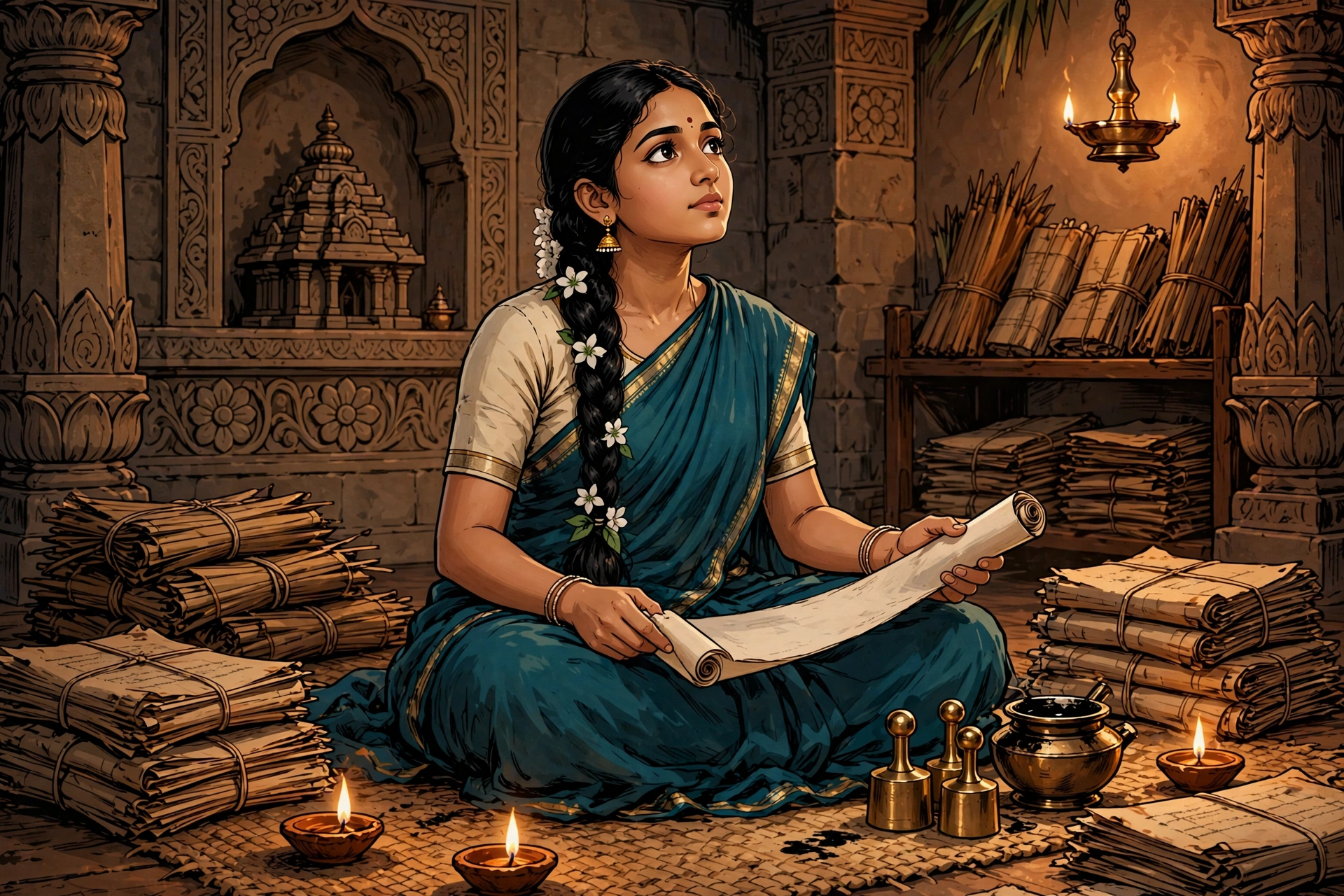
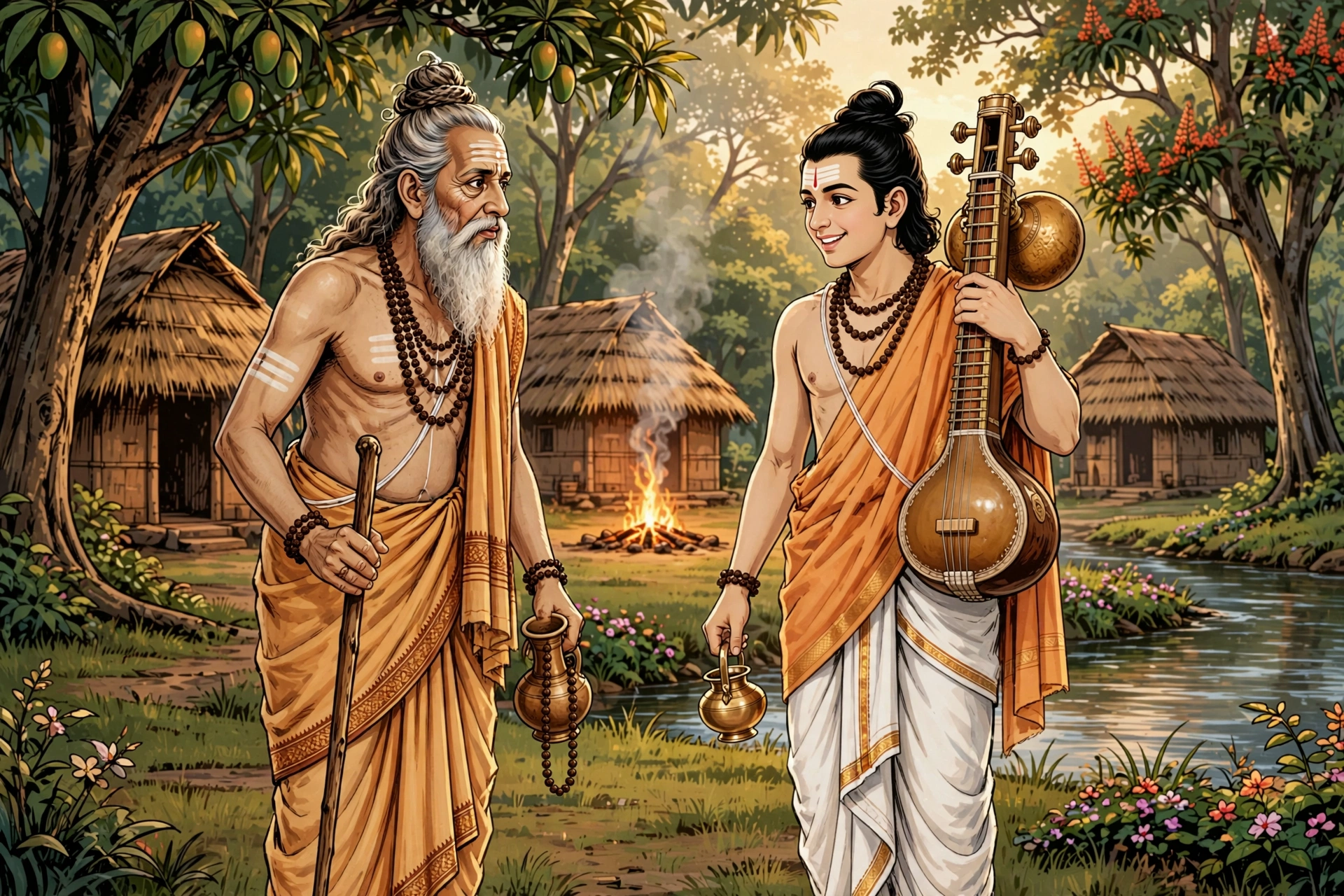
Old sage Valmiki lives in a forest hut and knows every holy book. Yet one question troubles him. He asks the travelling sage Narada: who in this world is good in every way - loved by people and feared by demons in battle?

बूढ़े ऋषि वाल्मीकि वन की कुटिया में रहते हैं और सारे पवित्र ग्रंथ जानते हैं। फिर भी एक सवाल उन्हें सताता है। वे घूमते - फिरते ऋषि नारद से पूछते हैं: इस दुनिया में कौन हर तरह से अच्छा है - जिसे लोग प्यार करें और युद्ध में राक्षस भी डरें?

Slide 02 Insight

Measure Before Hero

Measure Before Hero

Slide 02 - Measure Before Hero

Why build a measure before telling a hero's story? Because without thankfulness and truth as your scale, a story stays only fun. Valmiki first writes what makes a person great - then finds the man. Write your three rules of life, and test every hero by them.

नायक की कहानी से पहले कसौटी क्यों बनाई जाए? क्योंकि कृतज्ञता और सत्य के बिना कहानी सिर्फ मज़ा है। वाल्मीकि पहले लिखते हैं कि बड़ा आदमी कैसा होता है - फिर मनुष्य खोजते हैं। जीवन के तीन नियम लिखो, और हर नायक को उसी पर परखो।

Slide 03

Rama Named

Rama Named

Slide 03 - Rama Named

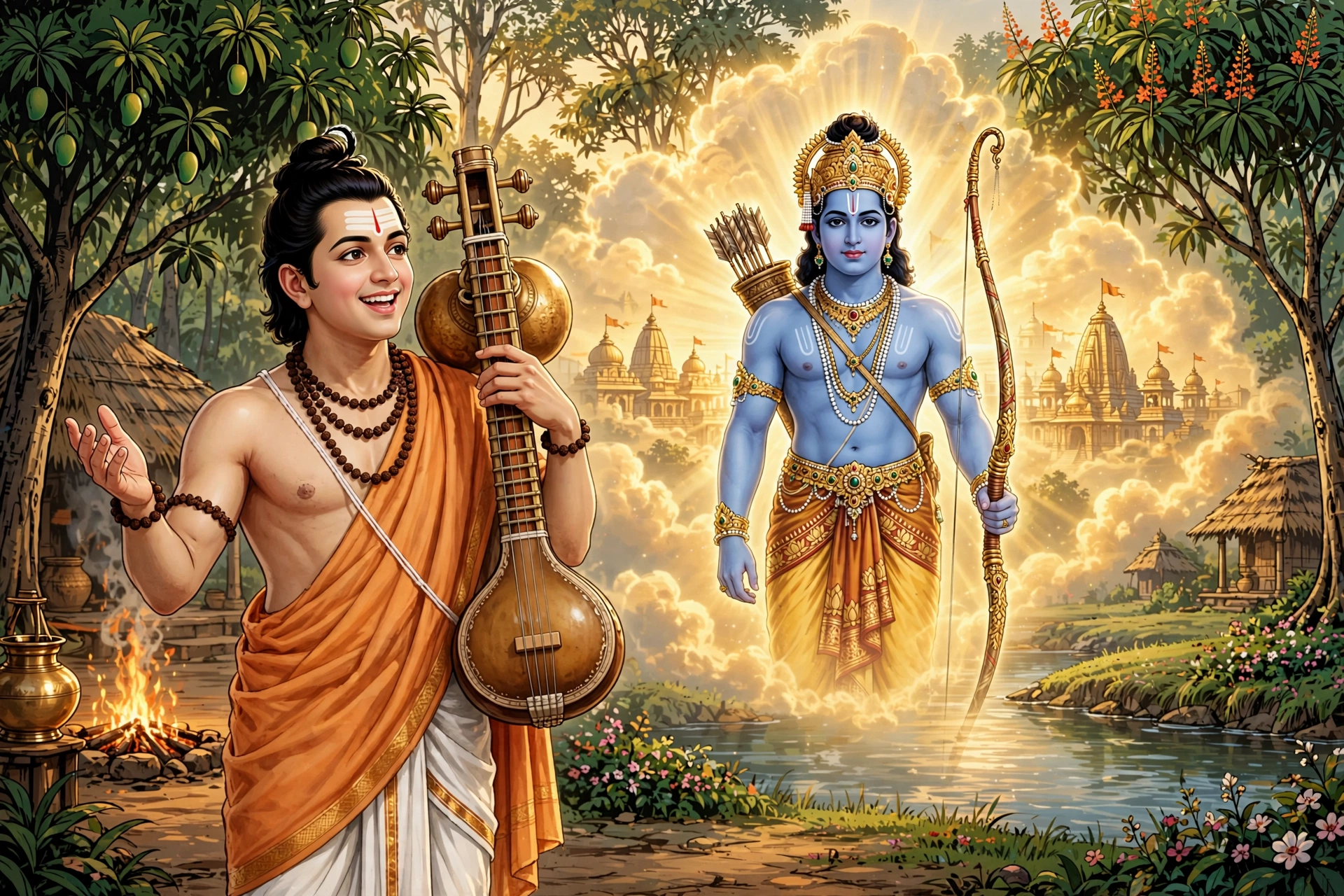
Narada smiles with joy and answers: Rama, prince of Ayodhya. He is calm, truthful, patient, and kind. As Narada speaks, Rama himself appears in a golden vision, bow in hand, ready to save the world.

नारद खुशी से मुस्कराकर जवाब देते हैं: अयोध्या का राजकुमार राम। वह शांत, सच्चा, धैर्यवान और दयालु है। जैसे ही नारद बोलते हैं, राम खुद सुनहरी रोशनी में दिखते हैं - हाथ में धनुष, दुनिया बचाने को तैयार।

Slide 04

Body Certifies Soul

Body Certifies Soul

Slide 04 - Body Certifies Soul

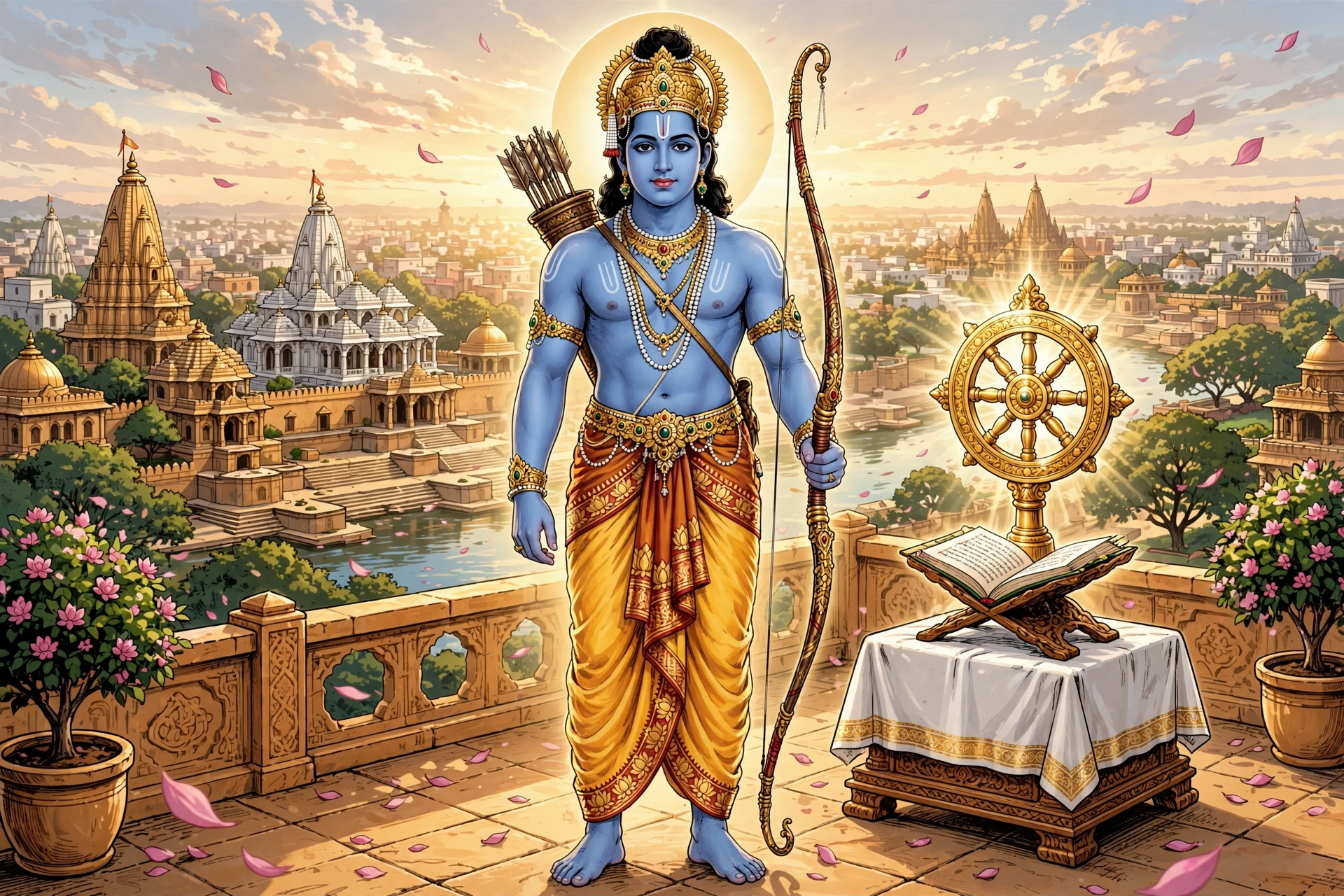
What does a perfect hero look like? Broad shoulders to carry duty, a calm face, eyes that see everyone equally. Rama stands before his shining city, and beside him glow the wheel of duty and the book of wise laws.

सच्चा नायक कैसा दिखता है? कर्तव्य ढोने को चौड़े कंधे, सबको बराबर देखने वाली आँखें, शांत चेहरा। राम अपनी चमकती अयोध्या के सामने खड़े हैं, और पास ही चमकते हैं कर्तव्य का पहिया और ज्ञानी कानूनों की पुस्तक।

Slide 05 Insight

Flesh Shows Virtue

Flesh Shows Virtue

Slide 05 - Flesh Shows Virtue

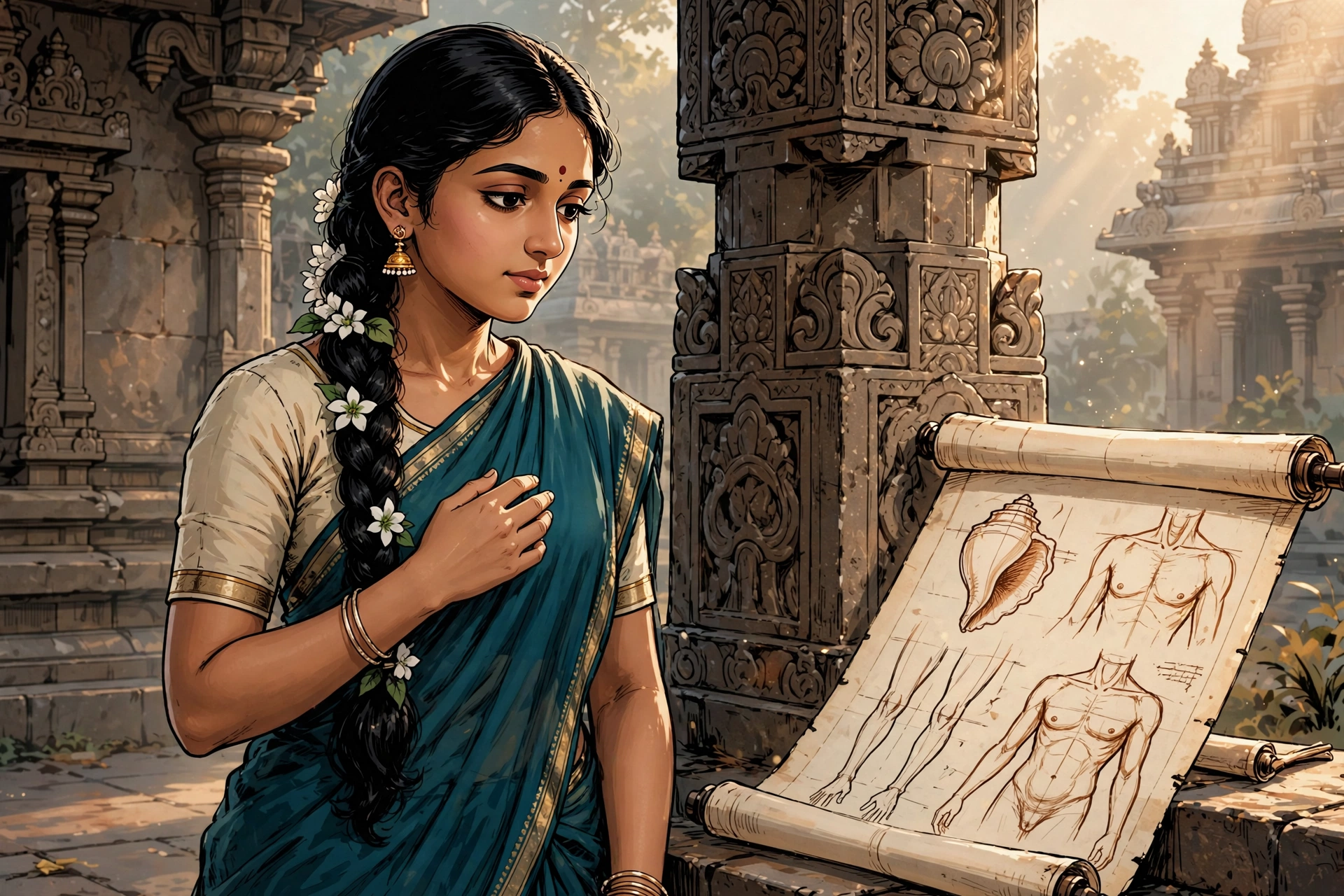
Why join body with virtue? Because the body is the heart's report card - a broad chest carries duty, big eyes see all as equal, a calm face beats anger. Once a day, without a mirror, notice your shoulders, breath and eyes, and ask what goodness they show.

शरीर को गुण से क्यों जोड़ा गया? क्योंकि शरीर दिल की रिपोर्ट है - चौड़ी छाती कर्तव्य उठाती है, बड़ी आँखें सबको बराबर देखती हैं, शांत चेहरा गुस्सा जीतता है। दिन में एक बार, बिना शीशे के, कंधे, साँस और आँखें देखो - और पूछो कि वे कौन सी अच्छाई दिखा रहे हैं।

Slide 06

Two Boons Exile

Two Boons Exile

Slide 06 - Two Boons Exile

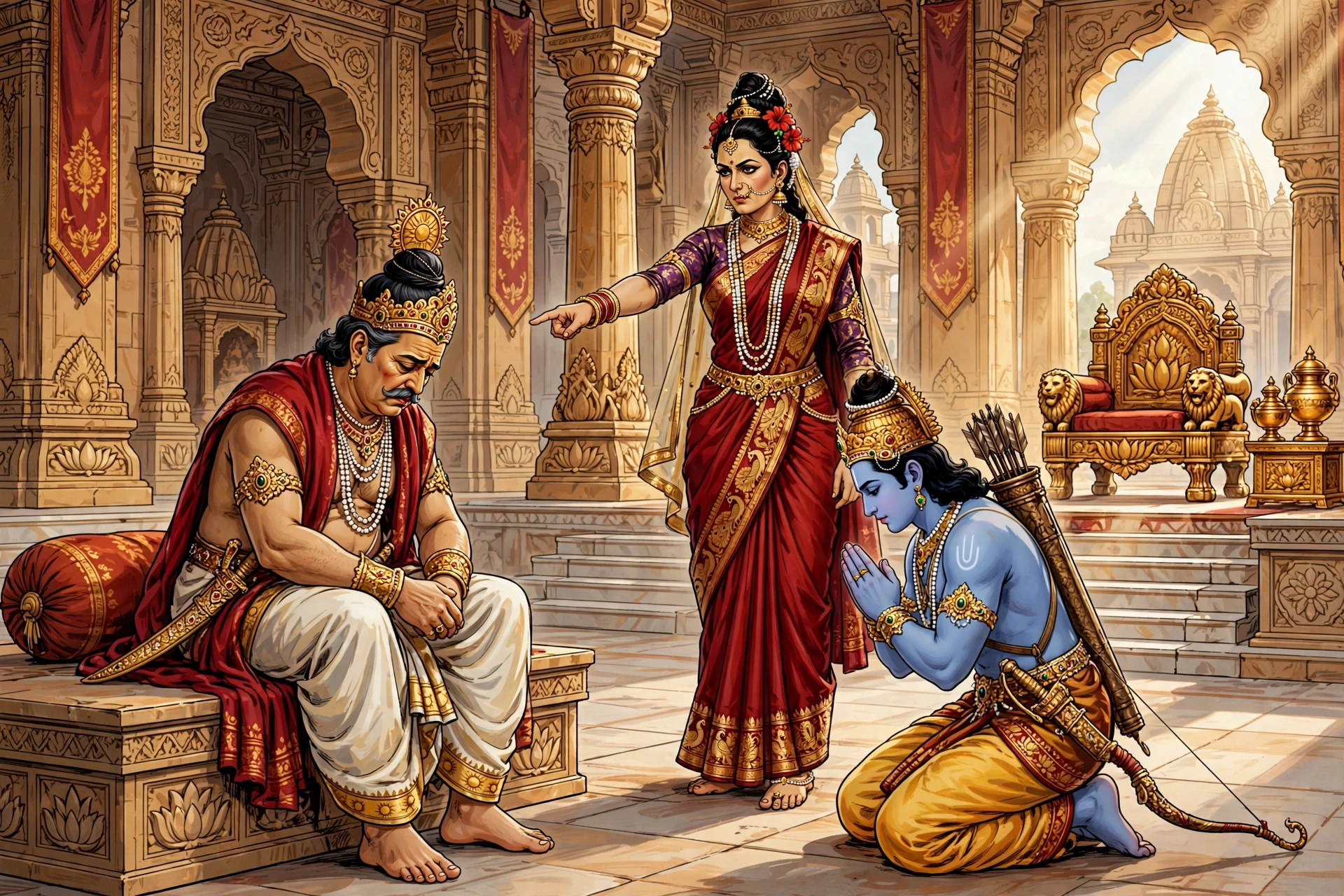
King Dasharatha is ready to crown his eldest son Rama. Then Rama's stepmother Kaikeyi stops the joy. She claims two old promises: her own son Bharata must be king, and Rama must spend fourteen years in the forest.

राजा दशरथ अपने बड़े बेटे राम को ताज पहनाने को तैयार हैं। तभी राम की सौतेली माँ कैकेयी खुशी रोक देती है। वह दो पुराने वचन माँगती है: उसके बेटे भरत को राज मिलेगा, और राम को चौदह साल वन में रहना होगा।

Slide 07

Ganga to Chitrakuta

Ganga to Chitrakuta

Slide 07 - Ganga to Chitrakuta

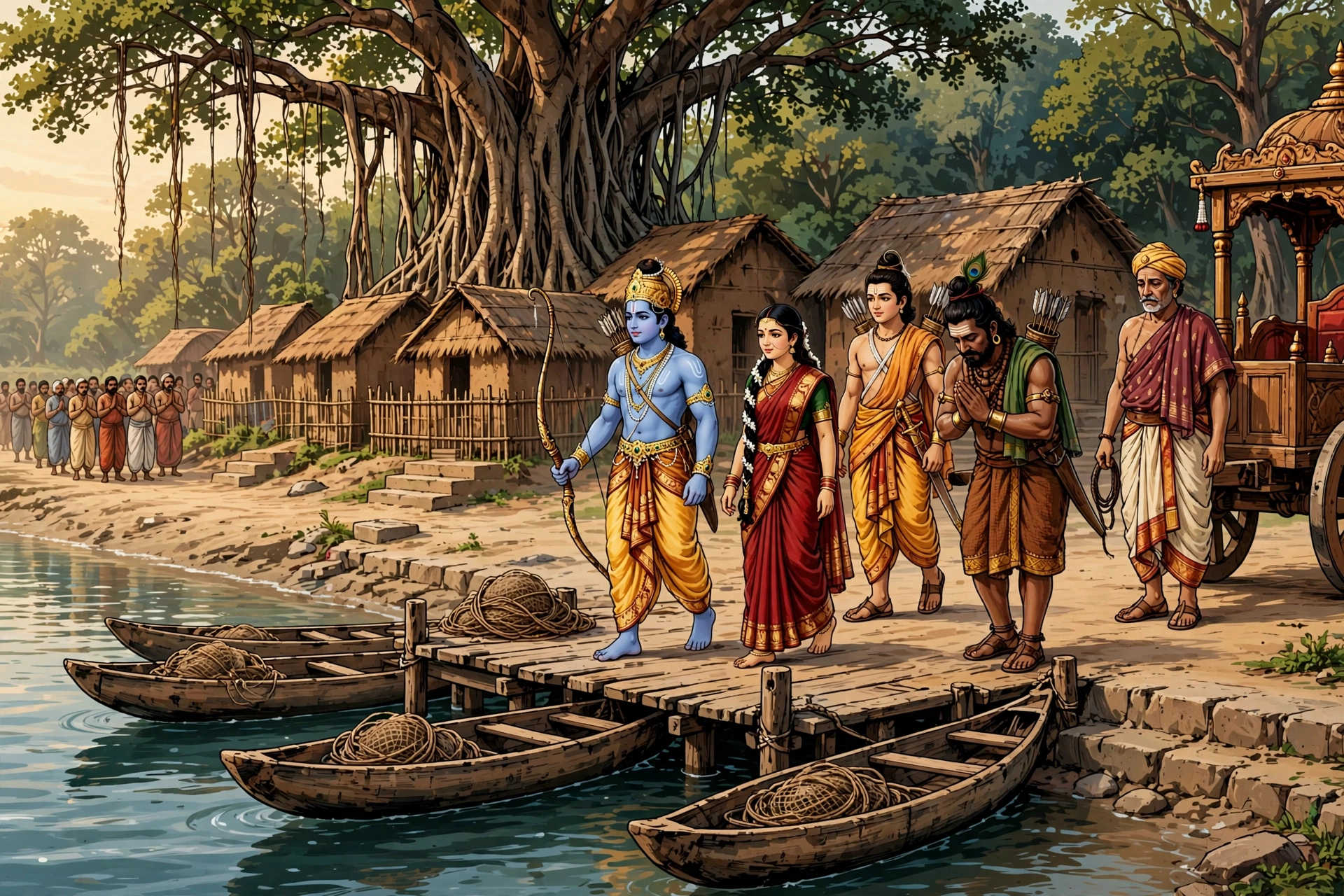
Rama accepts exile with a calm heart. His wife Sita and brother Lakshmana walk beside him into the forest. At the river, the boatman Guha ferries them across, while the royal chariot waits to carry the sad news home.

राम शांत मन से वनवास मान लेते हैं। उनकी पत्नी सीता और भाई लक्ष्मण भी साथ चलते हैं। नदी किनारे नाविक गुह उन्हें पार उतारता है, और शाही रथ दुखी खबर लेकर घर खड़ा रहता है।

Slide 08

Sandals of Trust

Sandals of Trust

Slide 08 - Sandals of Trust

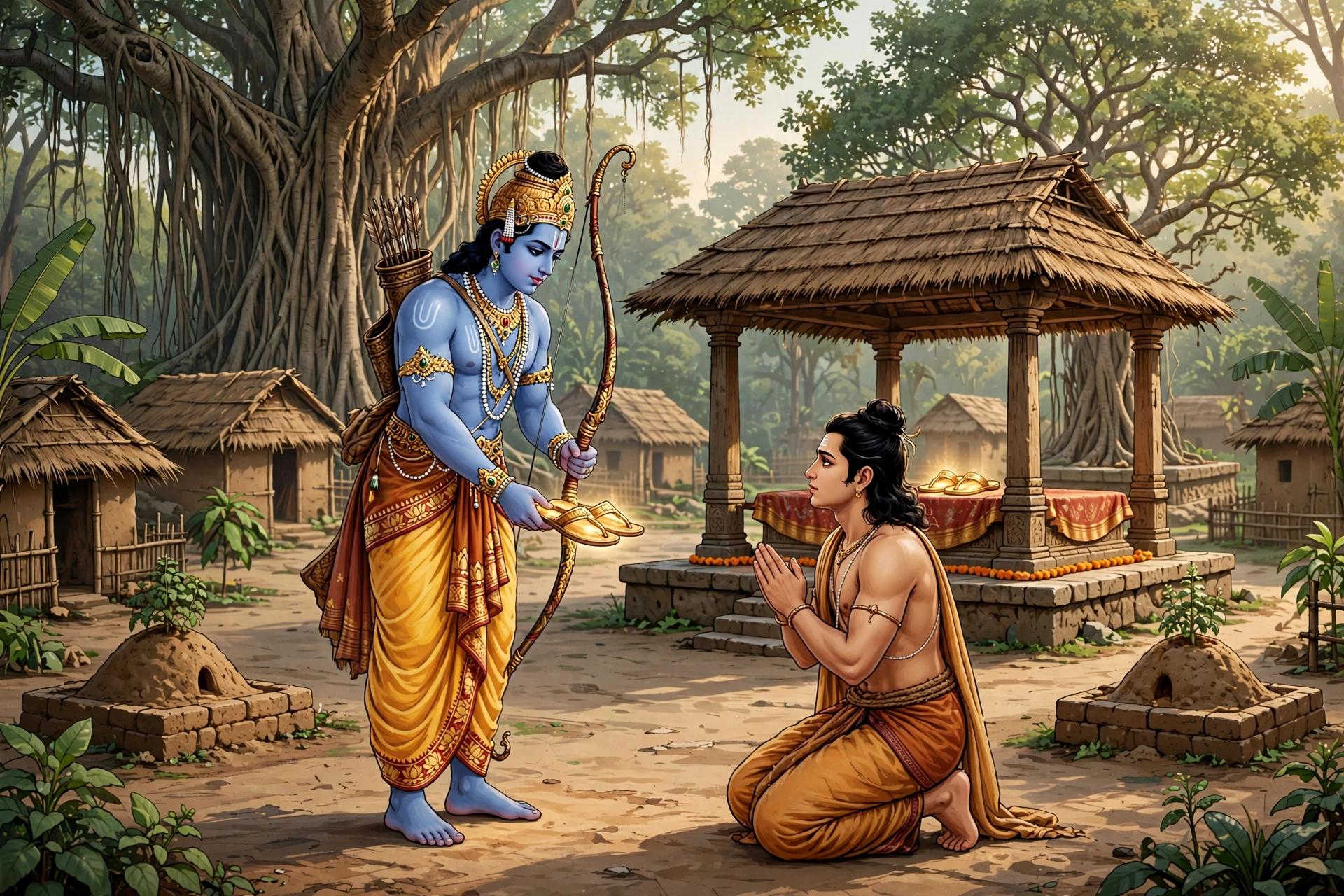
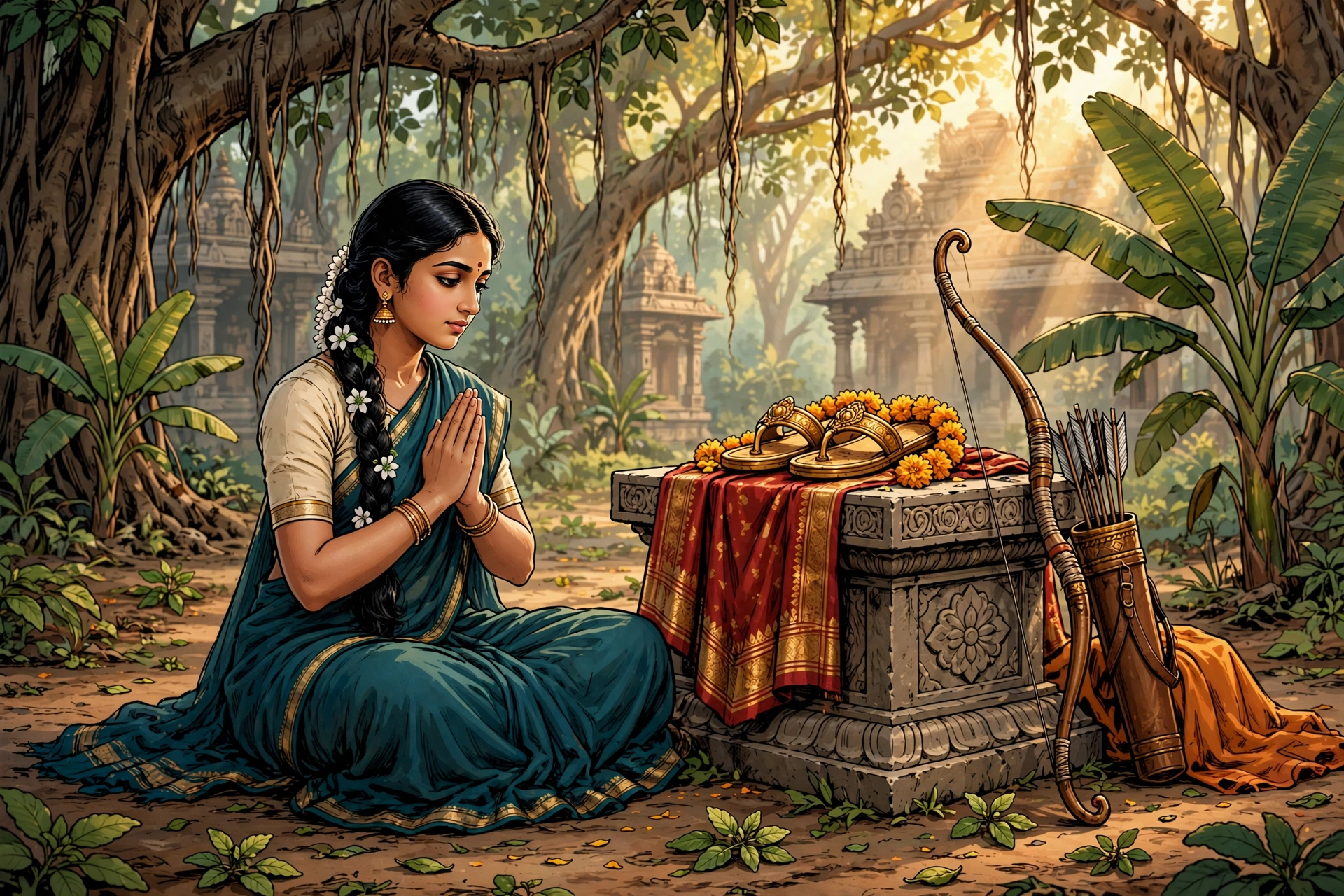
Bharata loves Rama and refuses the stolen throne. He begs Rama to return, but Rama keeps his father's word. So Bharata carries Rama's sandals to Nandigrama and rules the kingdom in his brother's name.

भरत राम से बहुत प्यार करता है और छल की गद्दी नहीं लेता। वह राम से लौटने की भीख माँगता है, पर राम पिता का वचन निभाते हैं। तब भरत राम की खड़ाऊँ लेकर नंदिग्राम जाता है और भाई के नाम पर राज्य चलाता है।

Slide 09 Insight

Power as Trust

Power as Trust

Slide 09 - Power as Trust

Why does Rama accept exile while Bharata refuses a free throne? Because the real issue is trust, not orders. Rama keeps the king's word so all promises stay safe; Bharata refuses a tricked throne so order never breaks. Power is a trust, not a prize.

राम वनवास क्यों मानते हैं और भरत मुफ्त गद्दी क्यों ठुकराते हैं? क्योंकि असली बात आज्ञा नहीं, भरोसा है। राम राजा का वचन निभाते हैं ताकि सबके वचन बचे रहें; भरत छल की गद्दी ठुकराते हैं ताकि व्यवस्था कभी न टूटे। सत्ता पुरस्कार नहीं, भरोसा है।

Slide 10

Vow Against Rakshasas

Vow Against Rakshasas

Slide 10 - Vow Against Rakshasas

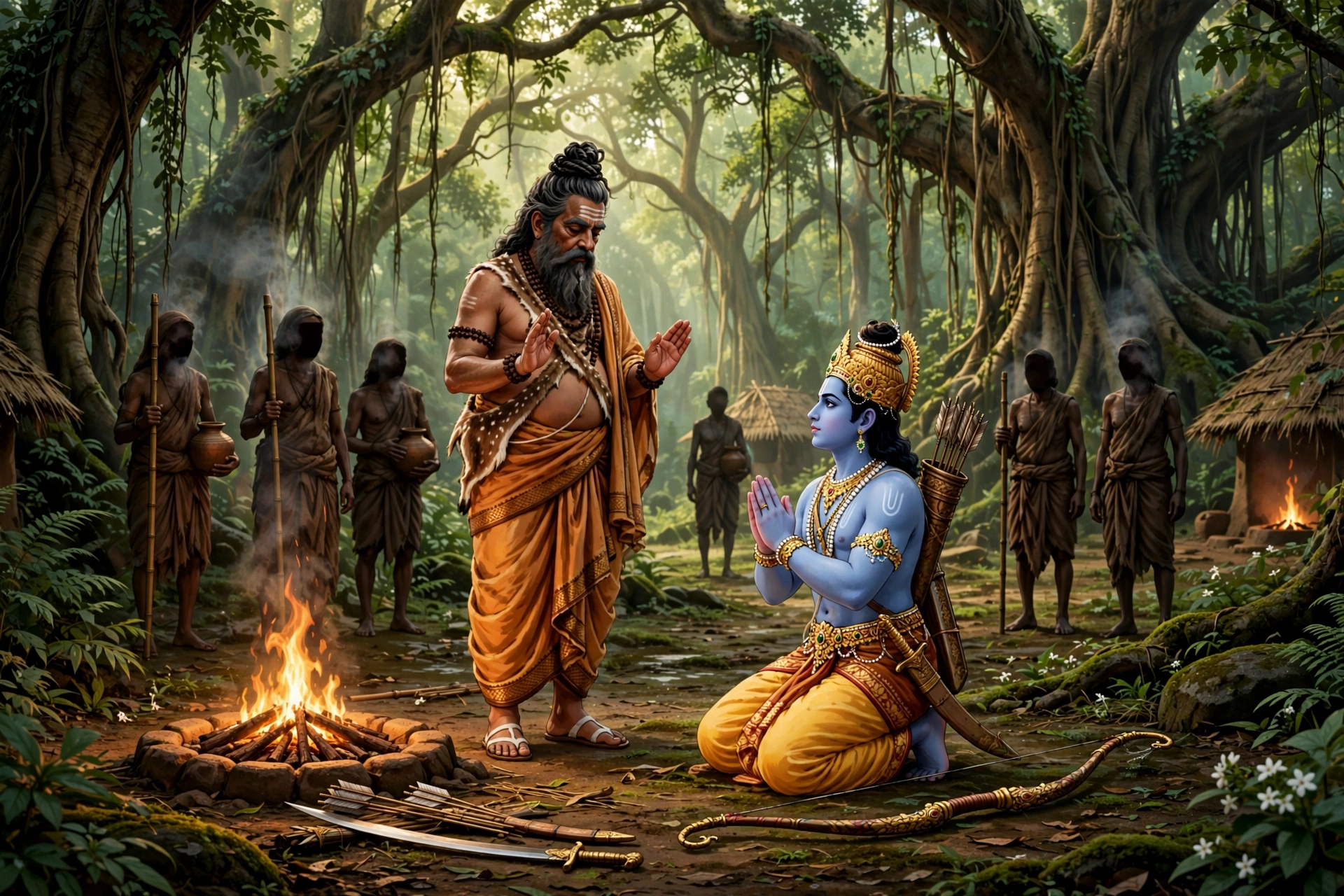
Deep in Dandaka forest, holy sages beg Rama for safety from demons. The great sage Agastya blesses him, gives him god - made weapons, and Rama promises: your prayers will be protected.

गहरे दंडक वन में पवित्र ऋषि राम से रक्षा माँगते हैं। महान ऋषि अगस्त्य उन्हें आशीर्वाद देते हैं, देवताओं के बनाए अस्त्र देते हैं, और राम वादा करते हैं: तुम्हारी प्रार्थना सुरक्षित रहेगी।

Slide 11

Fourteen Thousand Fall

Fourteen Thousand Fall

Slide 11 - Fourteen Thousand Fall

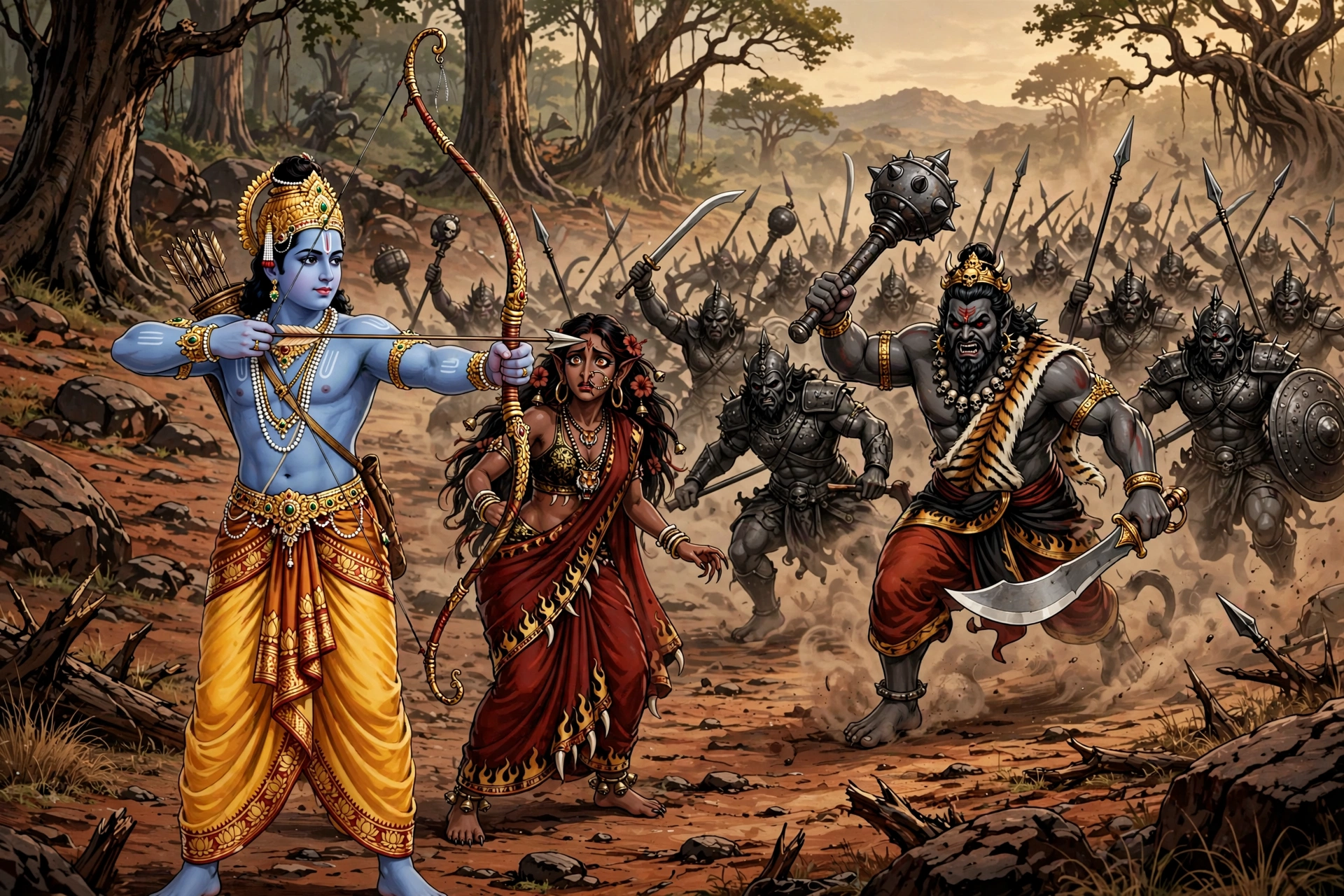
Shurpanakha runs crying to the demon chief Khara, and his fourteen thousand soldiers rush at Rama. Alone and calm, lotus - eyed Rama lifts his great bow and faces them all by himself.

शूर्पणखा रोती हुई राक्षस सरदार खर के पास दौड़ती है, और उसके चौदह हज़ार सैनिक राम पर टूट पड़ते हैं। अकेले और शांत खड़े कमल - नयन राम अपना बड़ा धनुष उठाते हैं - सबका सामना अकेले।

Slide 12

The Luring

The Luring

Slide 12 - The Luring

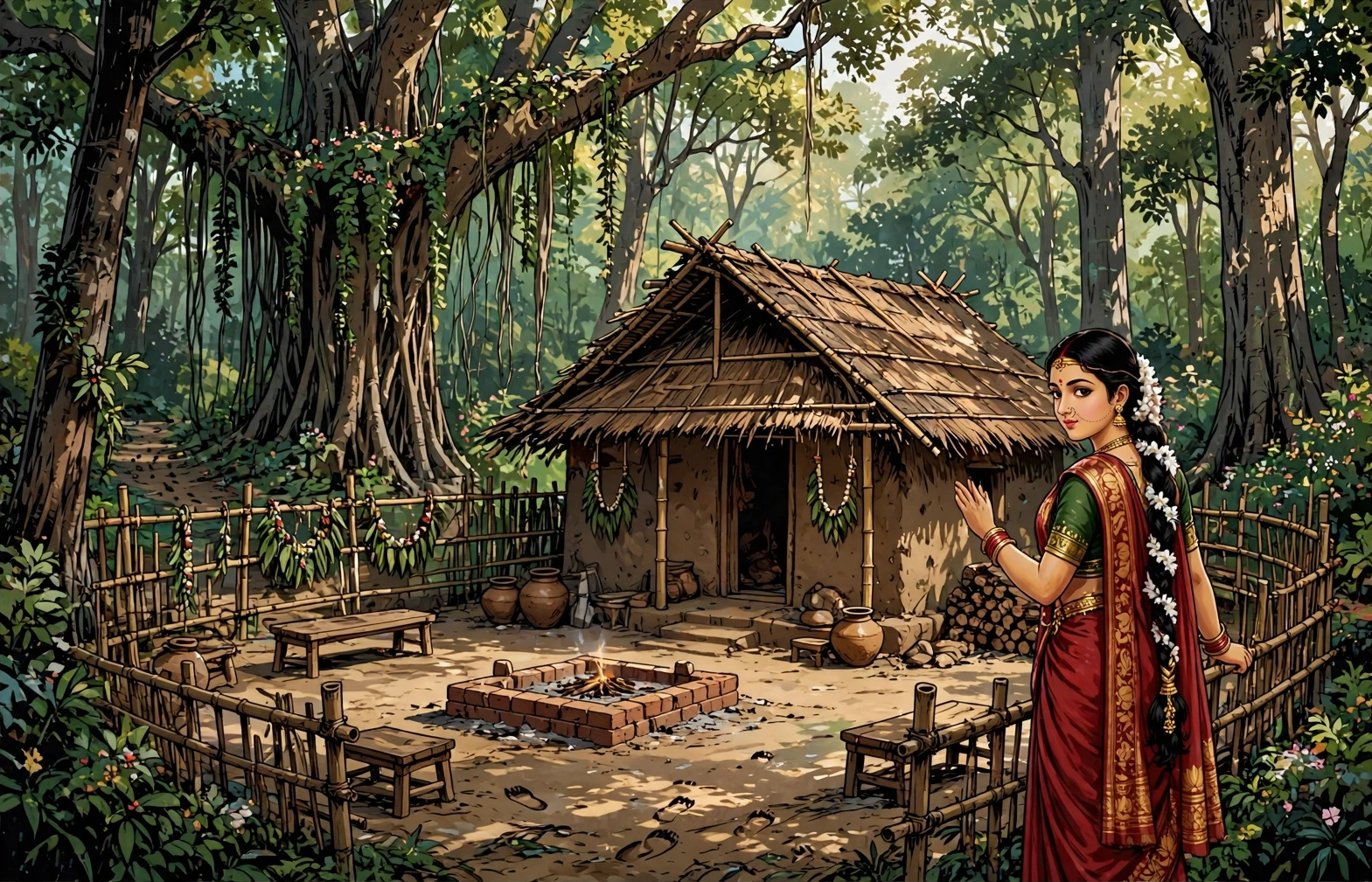
A golden deer lures Rama and Lakshmana far from home. All is quiet in the empty hut. Then Sita hears a cry for help from the trees - and takes a step toward the sound.

सुनहरा हिरन राम और लक्ष्मण को घर से दूर ले जाता है। सूनी कुटिया में सब शांत है। तभी सीता पेड़ों से मदद की पुकार सुनती है - और आवाज़ की ओर एक कदम बढ़ाती है।

Slide 13

Abduction Grief

Abduction Grief

Slide 13 - Abduction Grief

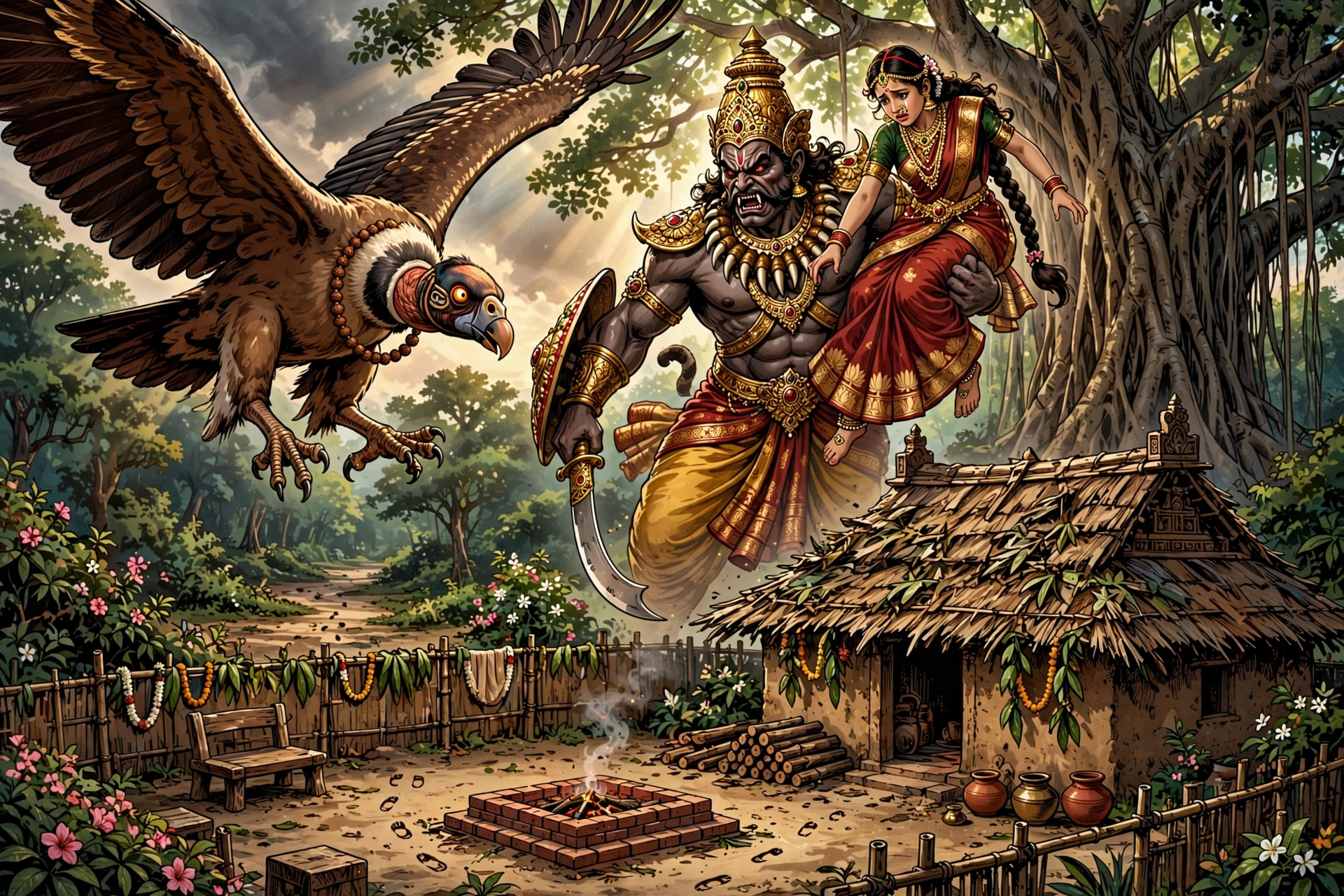
Demon king Ravana swoops down and carries Sita away into the sky. Only the brave old vulture Jatayu dares to stop him, diving with wide wings to bar the demon's path.

राक्षस राजा रावण झपटता है और सीता को उठाकर आकाश में ले जाता है। सिर्फ बहादुर बूढ़ा गिद्ध जटायु उसे रोकने की हिम्मत करता है, चौड़े पंख फैलाए राक्षस का रास्ता रोकता है।

Slide 14

Grief

Grief

Slide 14 - Grief

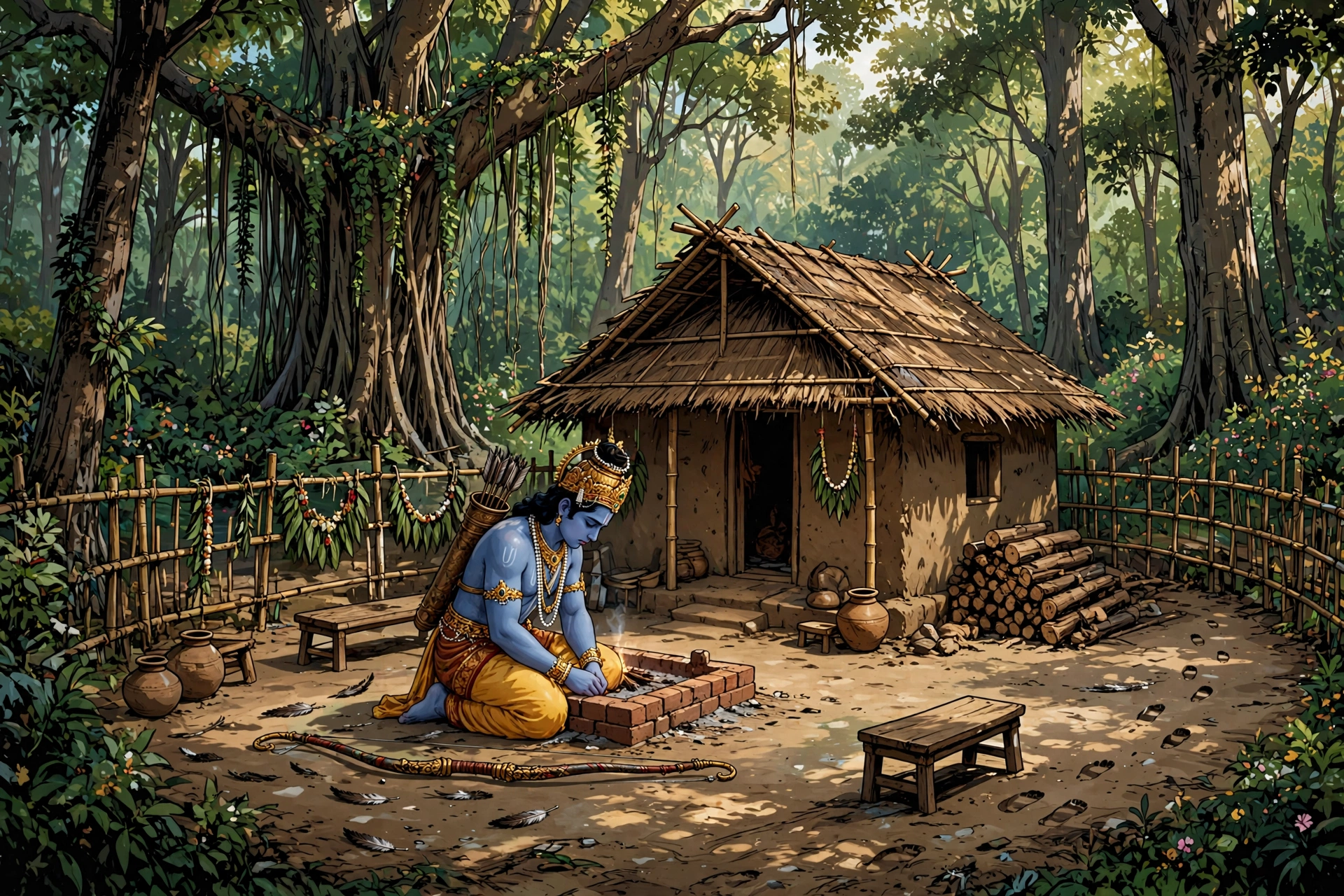
Rama returns to find feathers strewn and the courtyard empty. His bow lies forgotten on the ground. Kneeling by the cold fire, Rama weeps for his stolen Sita.

राम लौटकर देखते हैं - पंख बिखरे हैं और आँगन सूना है। उनका धनुष ज़मीन पर छूटा है। ठंडी आग के पास घुटनों पर बैठे राम चोरी गई सीता के लिए रोते हैं।

Slide 15

Rites

Rites

Slide 15 - Rites

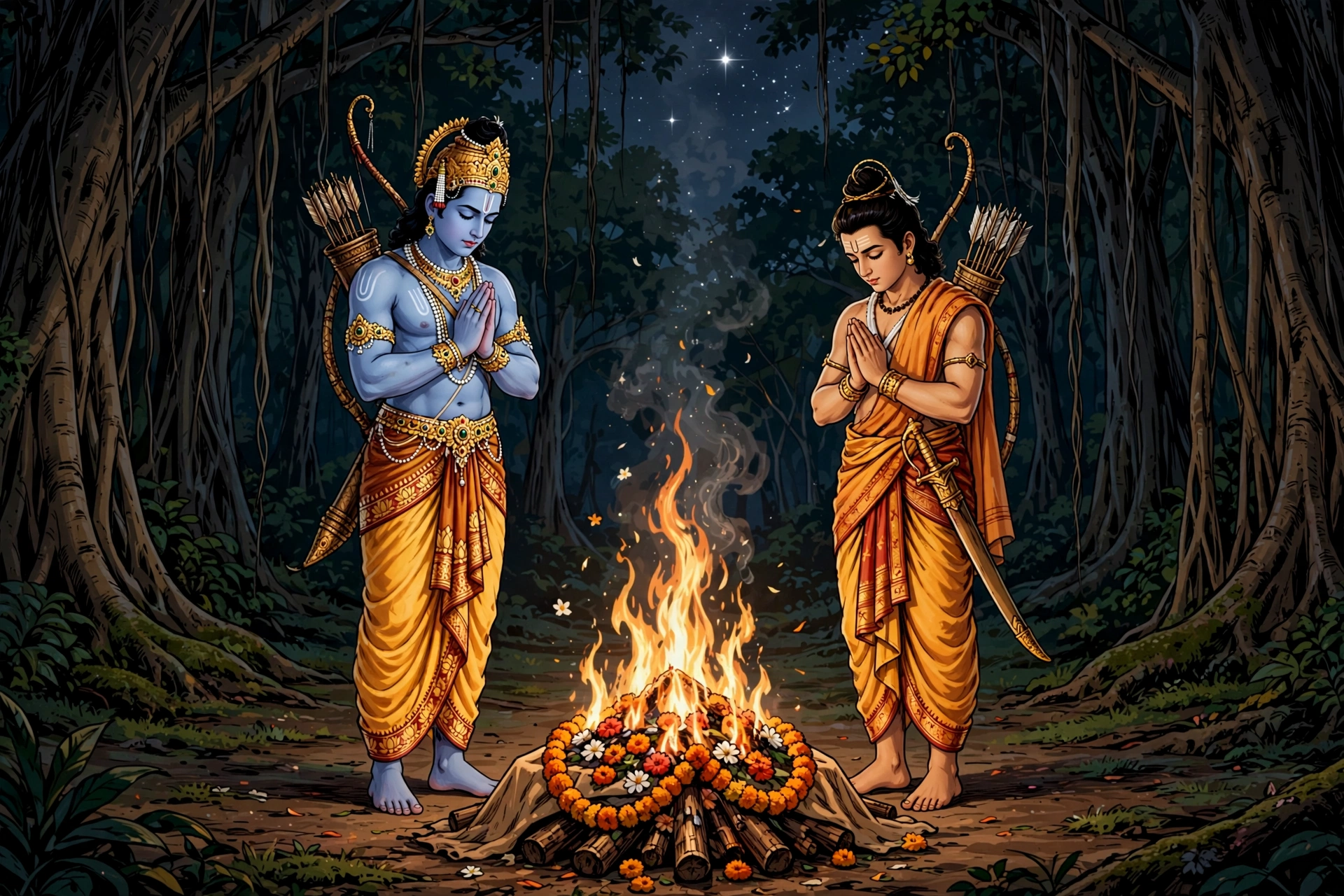
With love and honour, Rama and Lakshmana burn brave Jatayu on a bed of flowers under the stars. Then the two brothers turn south, where new friends and new dangers wait.

प्यार और सम्मान से राम और लक्ष्मण तारों के नीचे बहादुर जटायु का फूलों से ढका दाह करते हैं। फिर दोनों भाई दक्षिण की ओर मुड़ते हैं, जहाँ नए दोस्त और नए खतरे इंतज़ार करते हैं।

Slide 16

Shabari to Friendship

Shabari to Friendship

Slide 16 - Shabari to Friendship

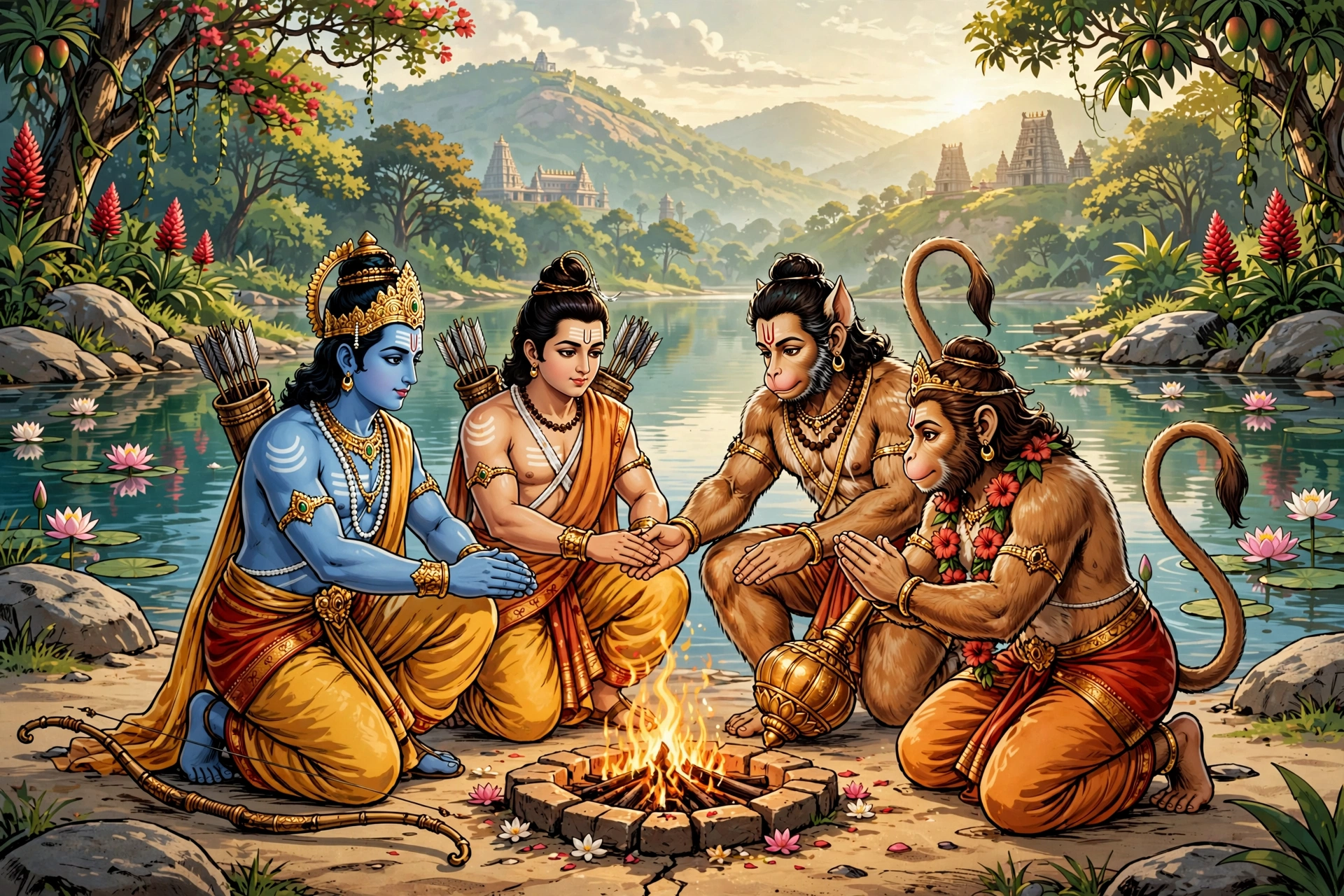
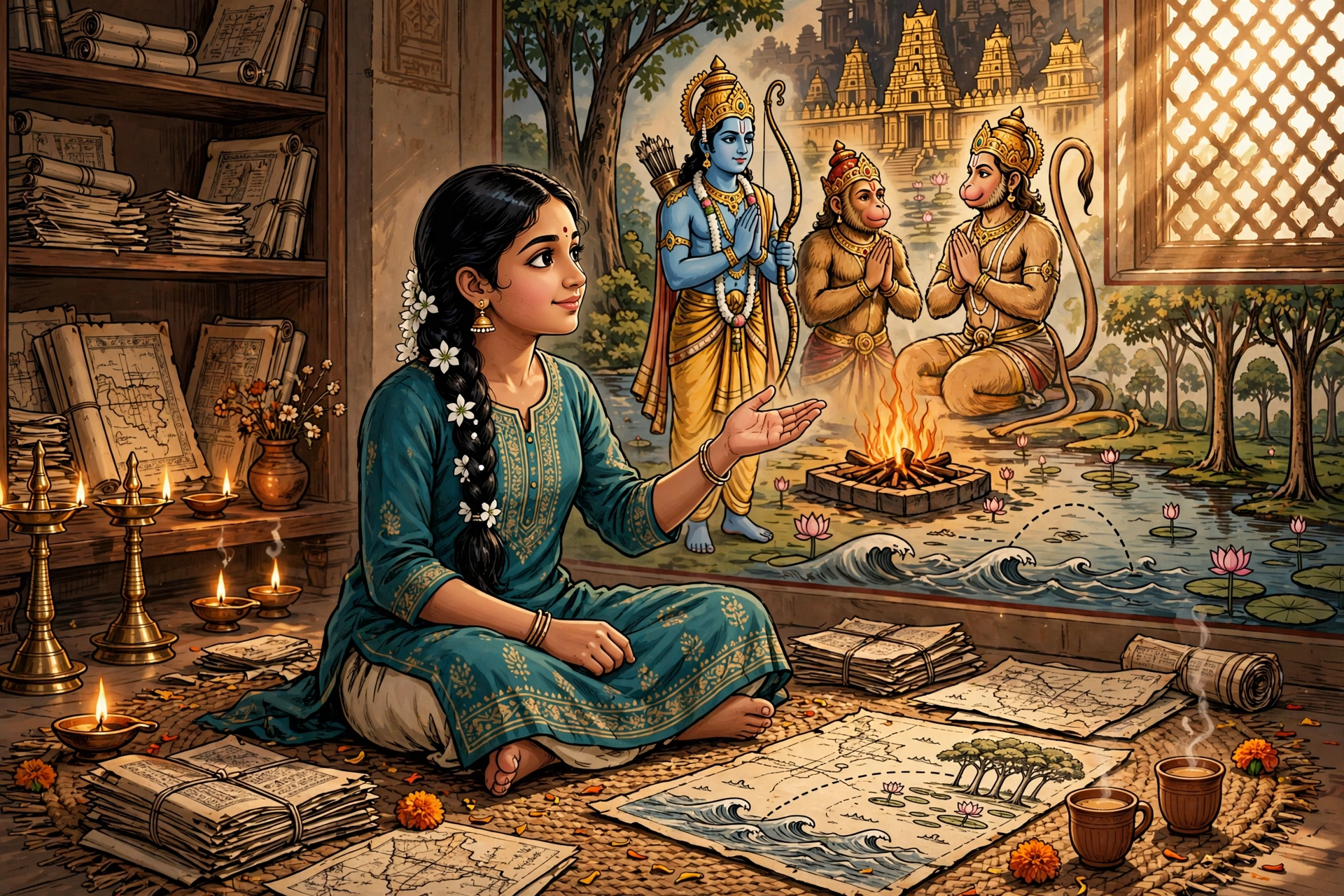
On Pampa's bank the two brothers meet Hanuman, and he brings them to Sugriva. Before a witness fire, Rama and Sugriva join hands in lifelong friendship.

पंपा नदी किनारे दोनों भाइयों की हनुमान से भेंट होती है। हनुमान उन्हें सुग्रीव से मिलाता है, और जलती आग को साक्षी करके राम और सुग्रीव हमेशा की दोस्ती बाँधते हैं।

Slide 17

Proof

Proof

Slide 17 - Proof

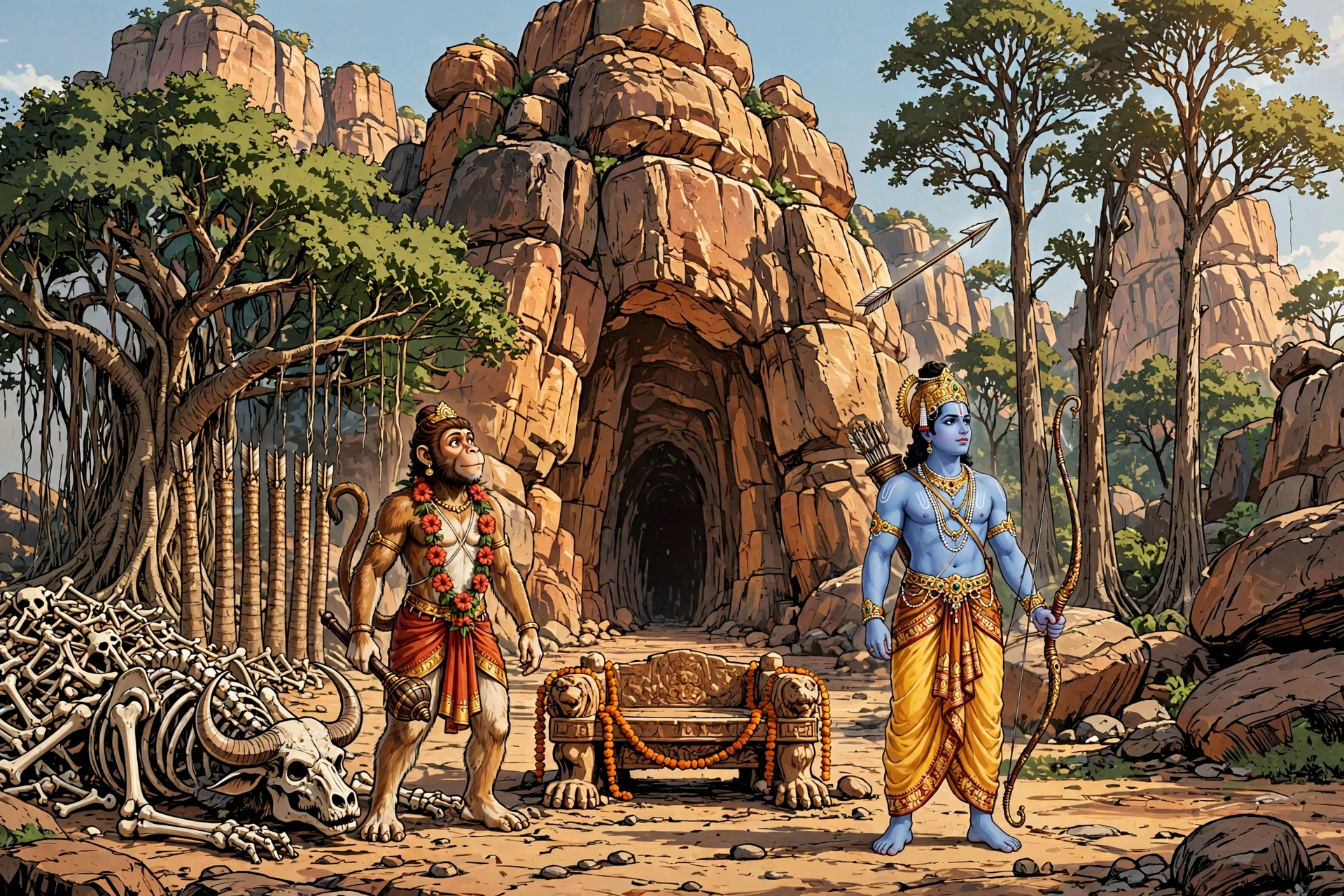
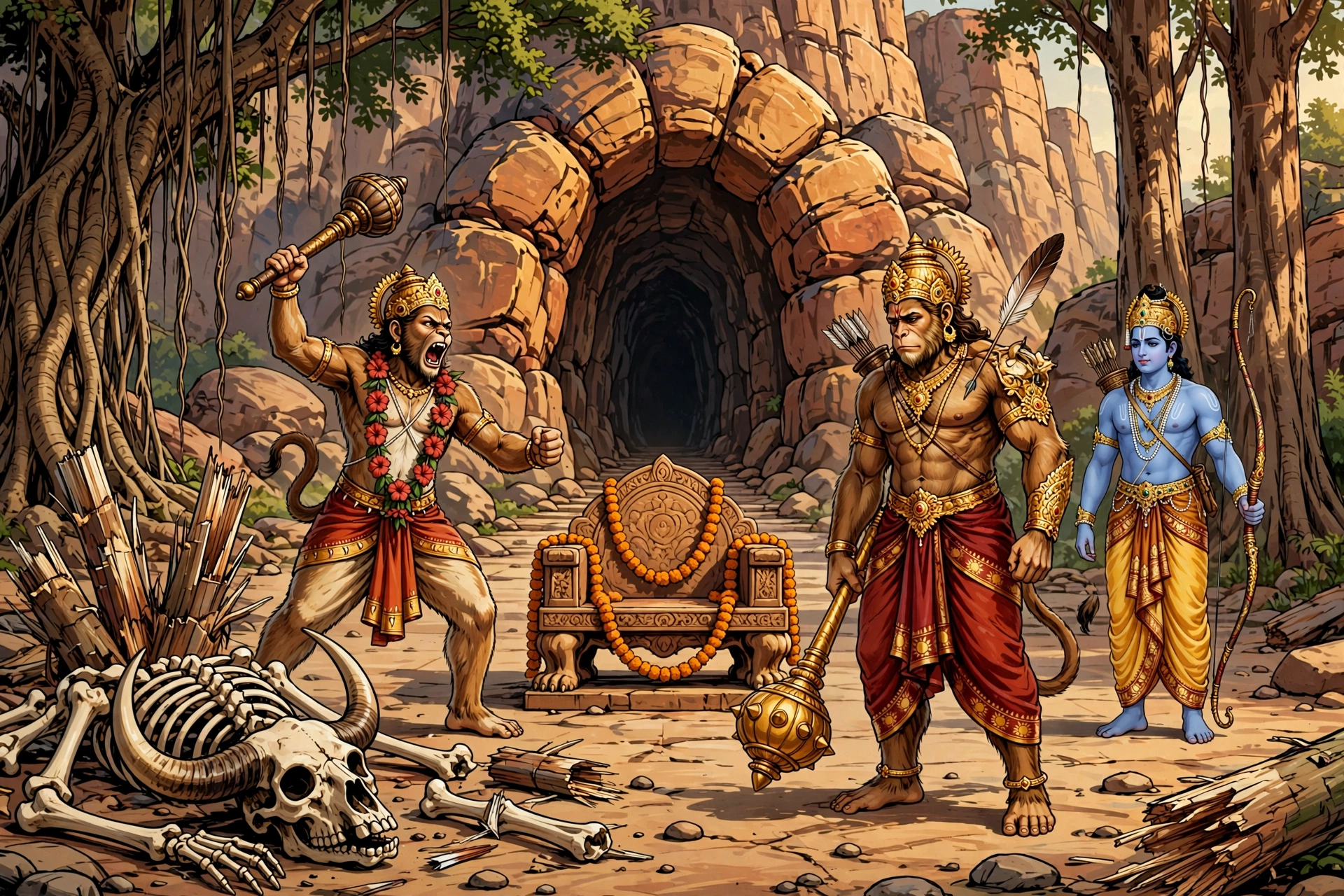
Monkey king Sugriva doubts Rama's strength. So Rama smiles, hurls the demon's old bones far away, and with one arrow pierces seven tall palm trees. Doubt washed away!

वानर राजा सुग्रीव को राम की ताकत पर शक है। राम मुस्कराते हैं, राक्षस की पुरानी हड्डियाँ दूर फेंकते हैं, और एक बाण से सात ऊँचे ताड़ बेध देते हैं। शक मिट गया!

Slide 18

Fall of Vali

Fall of Vali

Slide 18 - Fall of Vali

Sugriva roars his challenge at the gates of Kishkindha. His brother Vali storms out, strong as a mountain. Then Rama's single arrow flies from the trees - and unjust Vali falls.

सुग्रीव किष्किंधा के द्वार पर दहाड़कर ललकारता है। उसका भाई बालि पहाड़ जैसा आता है। तभी पेड़ों के बीच से राम का एक बाण चलता है - और अन्यायी बालि गिर जाता है।

Slide 19 Insight

Periphery Saves Center

Periphery Saves Center

Slide 19 - Periphery Saves Center

Why must a prince befriend forest monkeys? Because when the center breaks, the edges save. Exile took Rama's palace but gave him searchers, an army, and wings - great tales are won by friendship, not strength. Stuck? Ask help outside your rank.

राजकुमार को वन - वानरों से मित्रता क्यों करनी पड़ी? क्योंकि जब केंद्र टूटता है तो किनारे बचाते हैं। वनवास ने महल छीना पर खोजने वाले, सेना और पंख दिए - बड़ी कथाएँ दोस्ती से जीती जाती हैं, ताकत से नहीं। अटके हो? पद से बाहर मदद माँगो।

Slide 20

Leap to Ashoka

Leap to Ashoka

Slide 20 - Leap to Ashoka

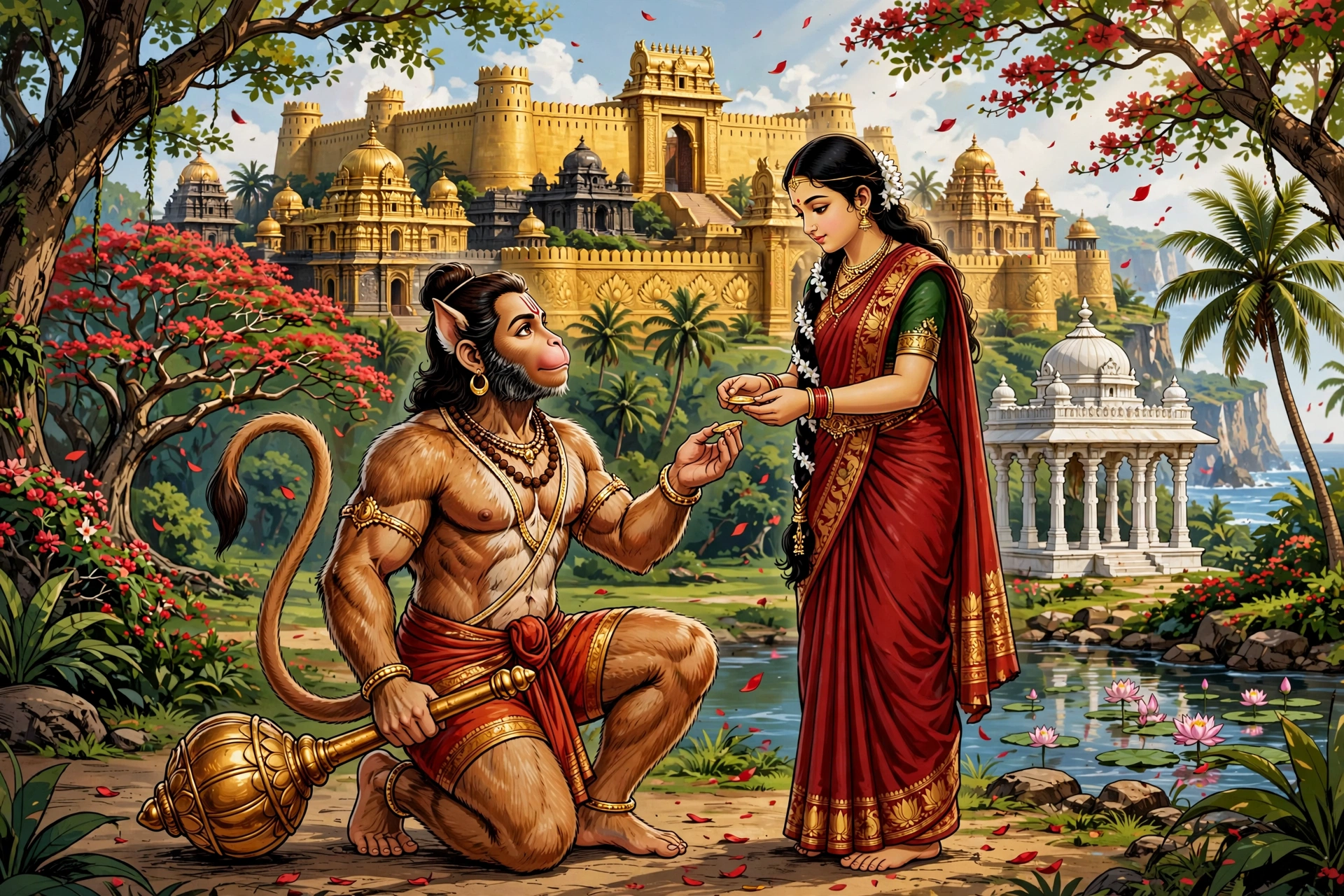
Hanuman leaps across the whole sea in one mighty jump. In Lanka's Ashoka garden he finds Sita, sad but brave. He gives her Rama's ring and promises: Rama will come like a storm for you.

हनुमान एक ही छलांग में पूरा सागर पार करता है। लंका के अशोक बगीचे में वह सीता को पाता है - उदास पर बहादुर। वह राम की अँगूठी देता है और वादा करता है: राम तूफ़ान की तरह आएँगे।

Slide 21

Burning

Burning

Slide 21 - Burning

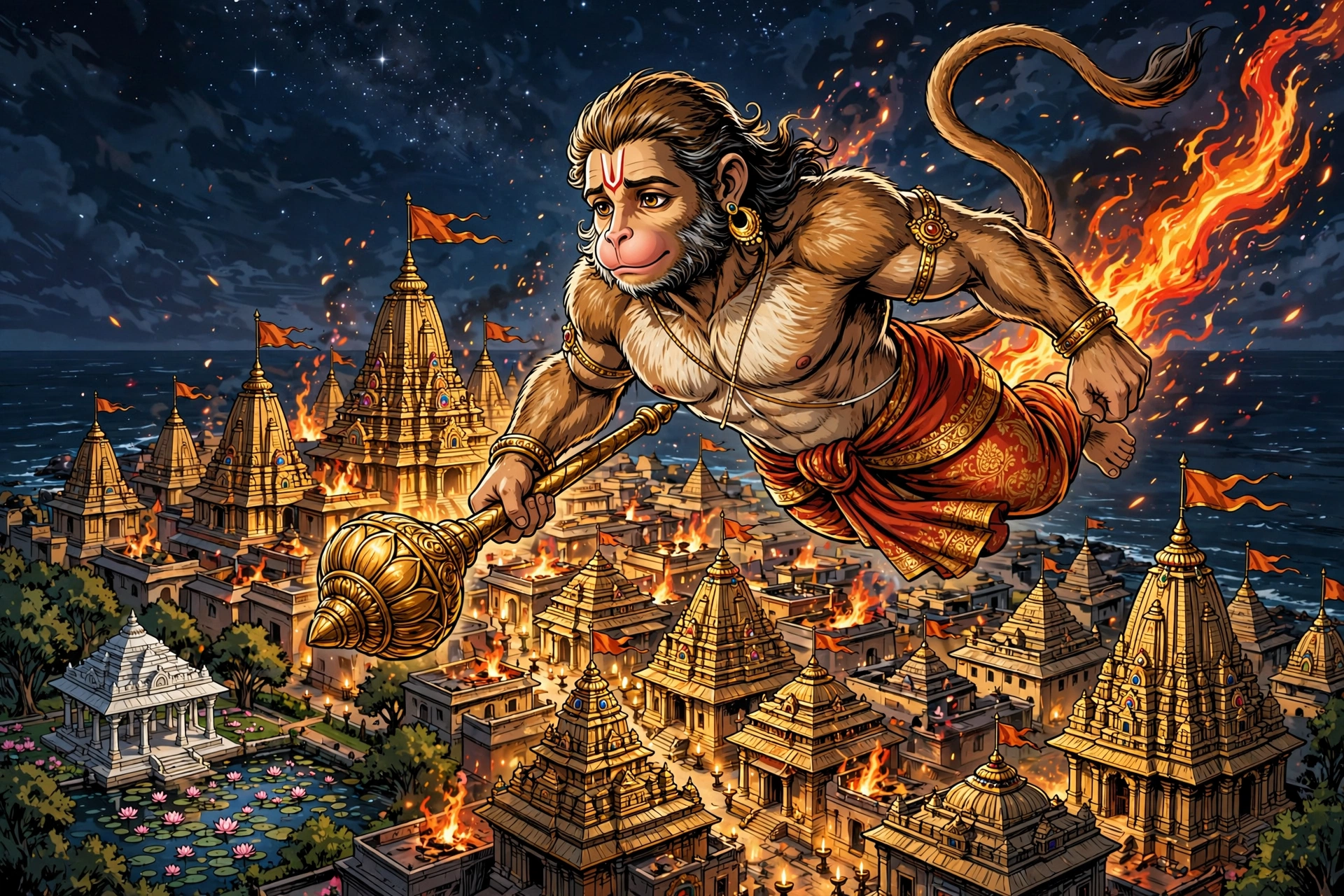
Caught, then freed by a gods - given blessing, Hanuman forgives his captors. He spares only Sita's garden, sets all Lanka on fire with his burning tail, and leaps away into the night.

पकड़ा गया, फिर देवताओं के वर से छूटा हनुमान अपने बंदियों को माफ़ करता है। वह सिर्फ सीता का बगीचा बचाता है, अपनी जलती पूँछ से सारी लंका में आग लगाता है, और रात में छलांग मारता है।

Slide 22

Lanka Burns Ocean Rises

Lanka Burns Ocean Rises

Slide 22 - Lanka Burns Ocean Rises

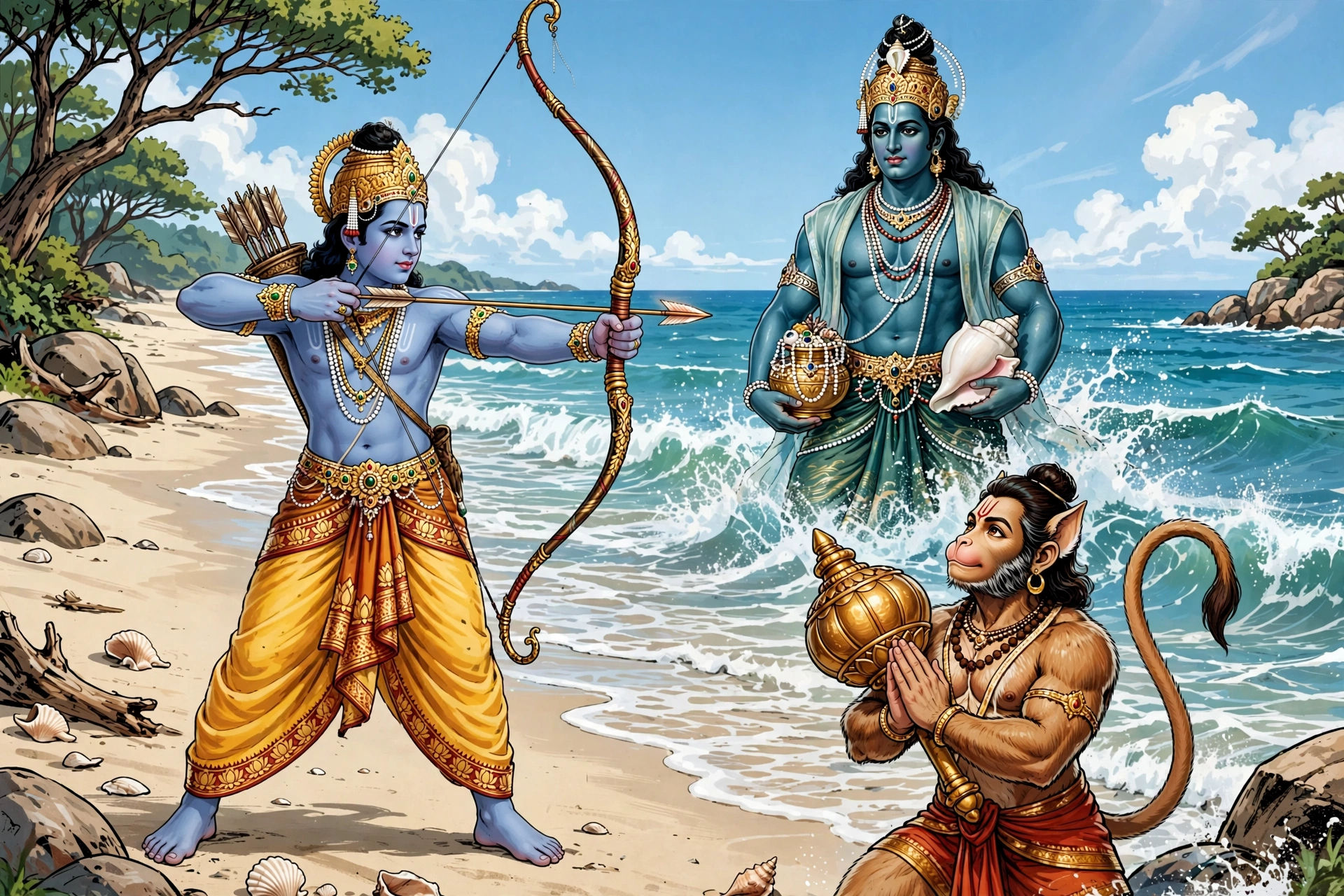
Hanuman brings happy news: Sita is found! But the wide sea blocks the way. Rama draws his bow at the waves until Ocean himself rises, holding gifts, and shows them how to cross.

हनुमान खुशखबरी लाता है: सीता मिल गई! पर चौड़ा सागर रास्ता रोकता है। राम लहरों पर धनुष तानते हैं, तब स्वयं सागर उपहार लेकर उठता है और पार जाने का रास्ता बताता है।

Slide 23

Bridge

Bridge

Slide 23 - Bridge

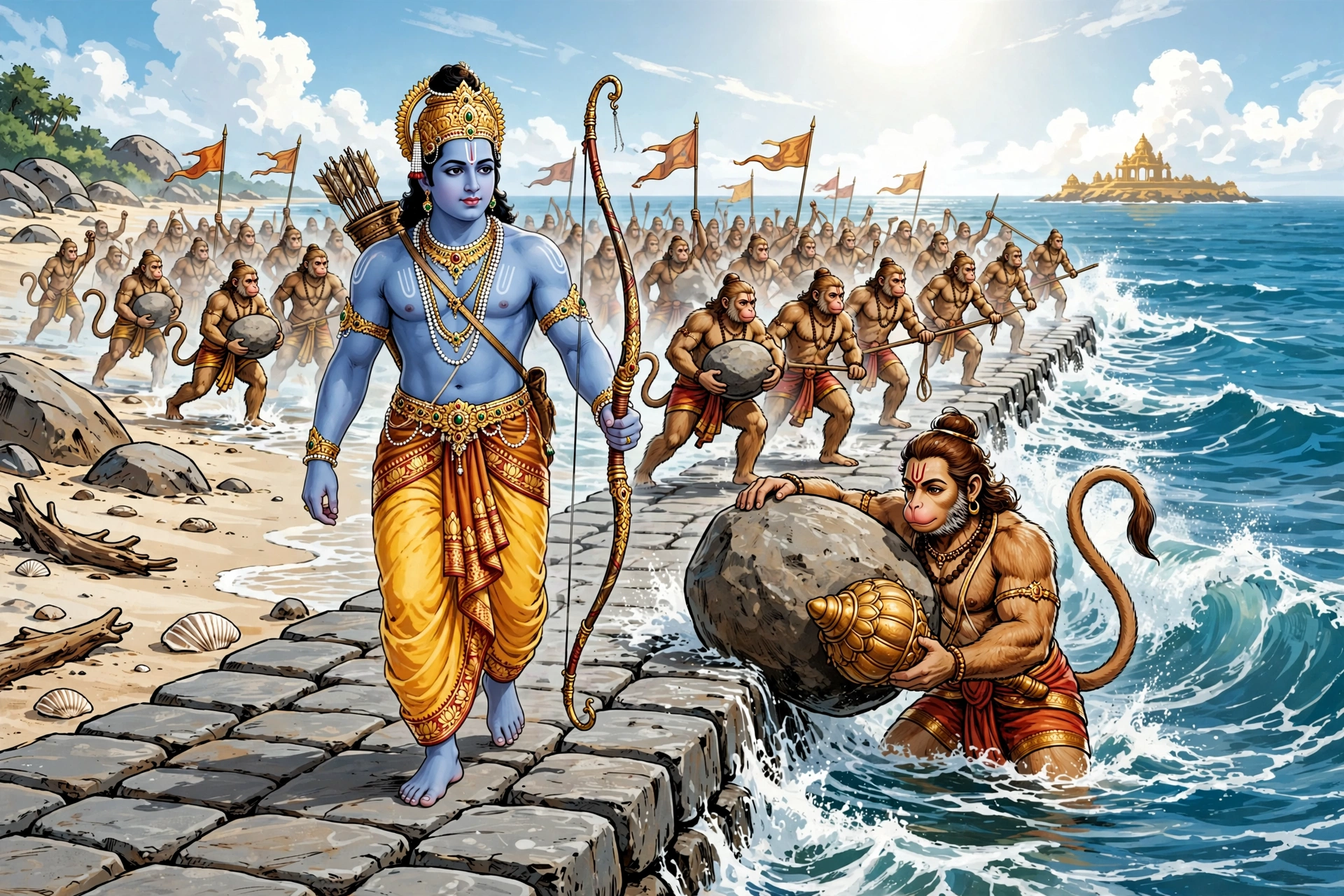
Stone by stone, the monkey army builds a floating bridge across the sea. Rama walks first on the new road, Hanuman lifts the heaviest boulders, and behind them the army marches stone by stone.

पत्थर पर पत्थर रखकर वानर सेना सागर पर तैरता पुल बनाती है। राम नई सड़क पर सबसे आगे चलते हैं, हनुमान सबसे भारी चट्टानें उठाता है, और पीछे सेना पत्थर दर पत्थर बढ़ती है।

Slide 24

Bridge Battle Fire

Bridge Battle Fire

Slide 24 - Bridge Battle Fire

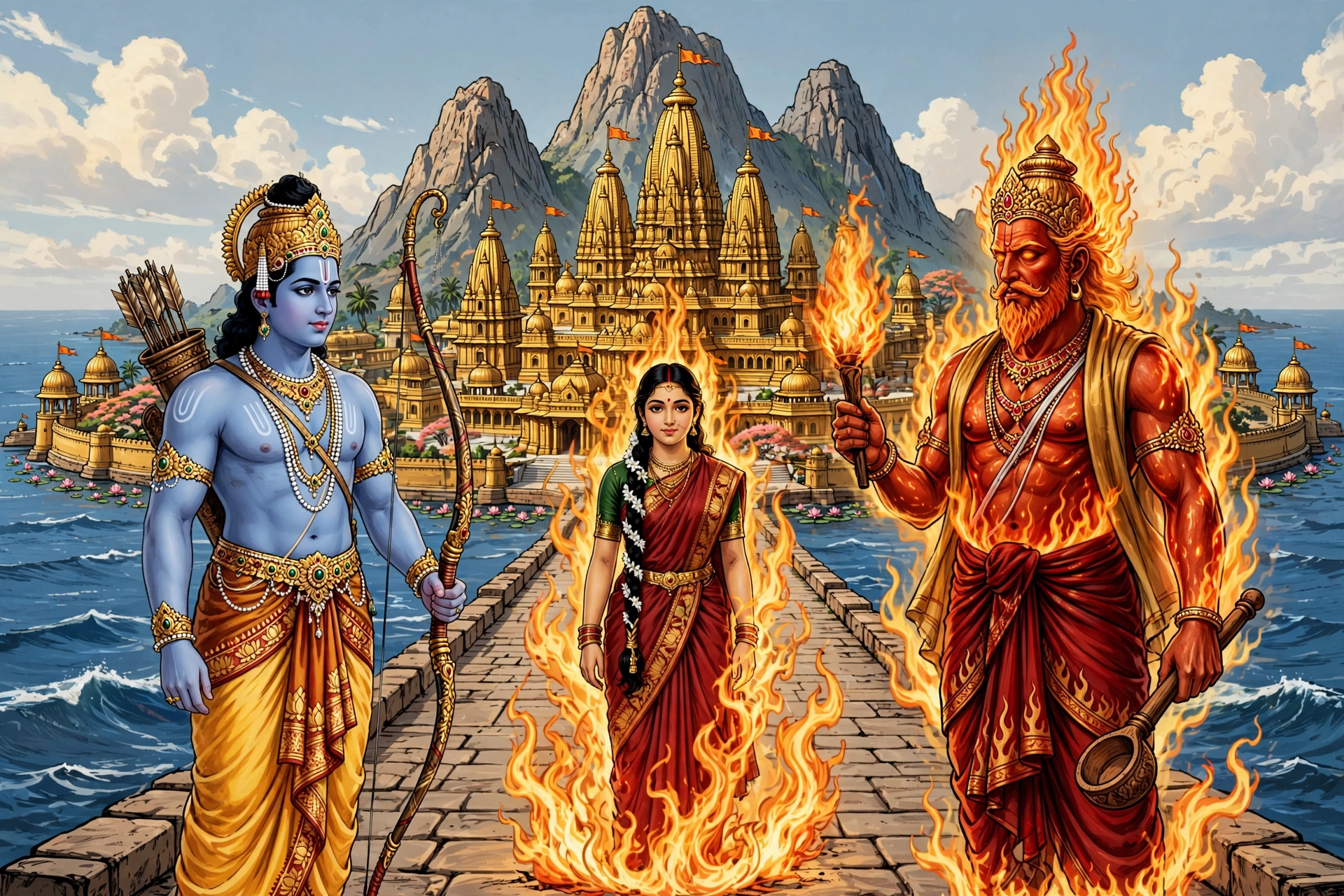
Saved, yet doubted - poor Sita must prove her truth. She walks calmly into roaring fire, and wonder! The flames curl around her like cool flowers. Fire - god Agni himself appears and declares her pure.

बचाई गई पर संदेह की गई - बेचारी सीता को अपनी सच्चाई साबित करनी है। वह शांत मन से धधकती आग में चलती है, और अचरज! लपटें फूलों जैसी ठंडी होकर उसे छूती तक नहीं। अग्नि देवता खुद आकर उसे पवित्र बताते हैं।

Slide 25

Return and Golden Rule

Return and Golden Rule

Slide 25 - Return and Golden Rule

The gods bless Rama, the fallen wake up, and all hurry home - Rama sends Hanuman flying ahead to tell Bharata: we are coming!

देवता राम को आशीर्वाद देते हैं, गिरे हुए जाग उठते हैं, और सब जल्दी घर की ओर बढ़ते हैं - राम हनुमान को आगे उड़कर भरत को बताने भेजते हैं: हम आ रहे हैं!

Slide 26

Coronation

Coronation

Slide 26 - Coronation

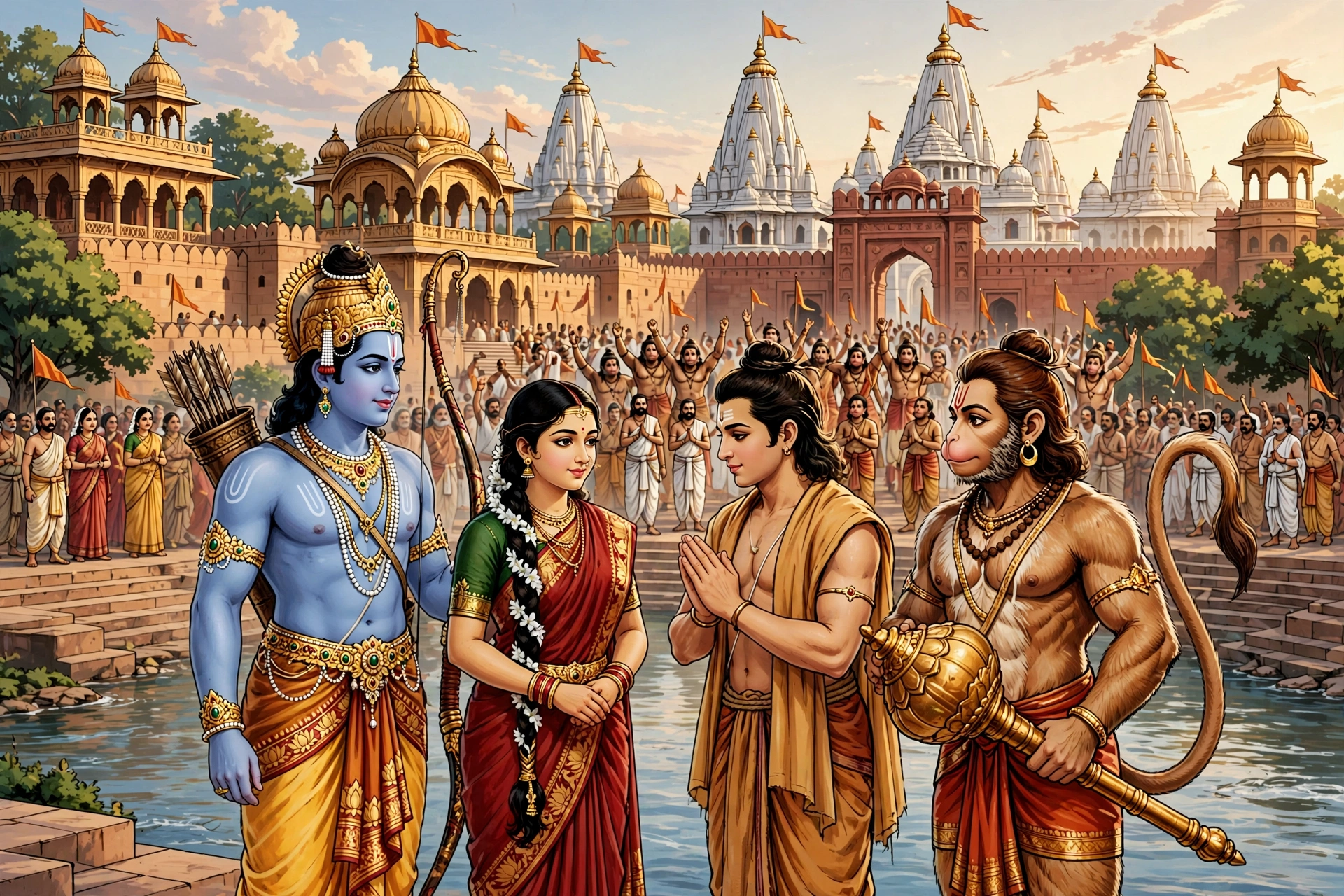
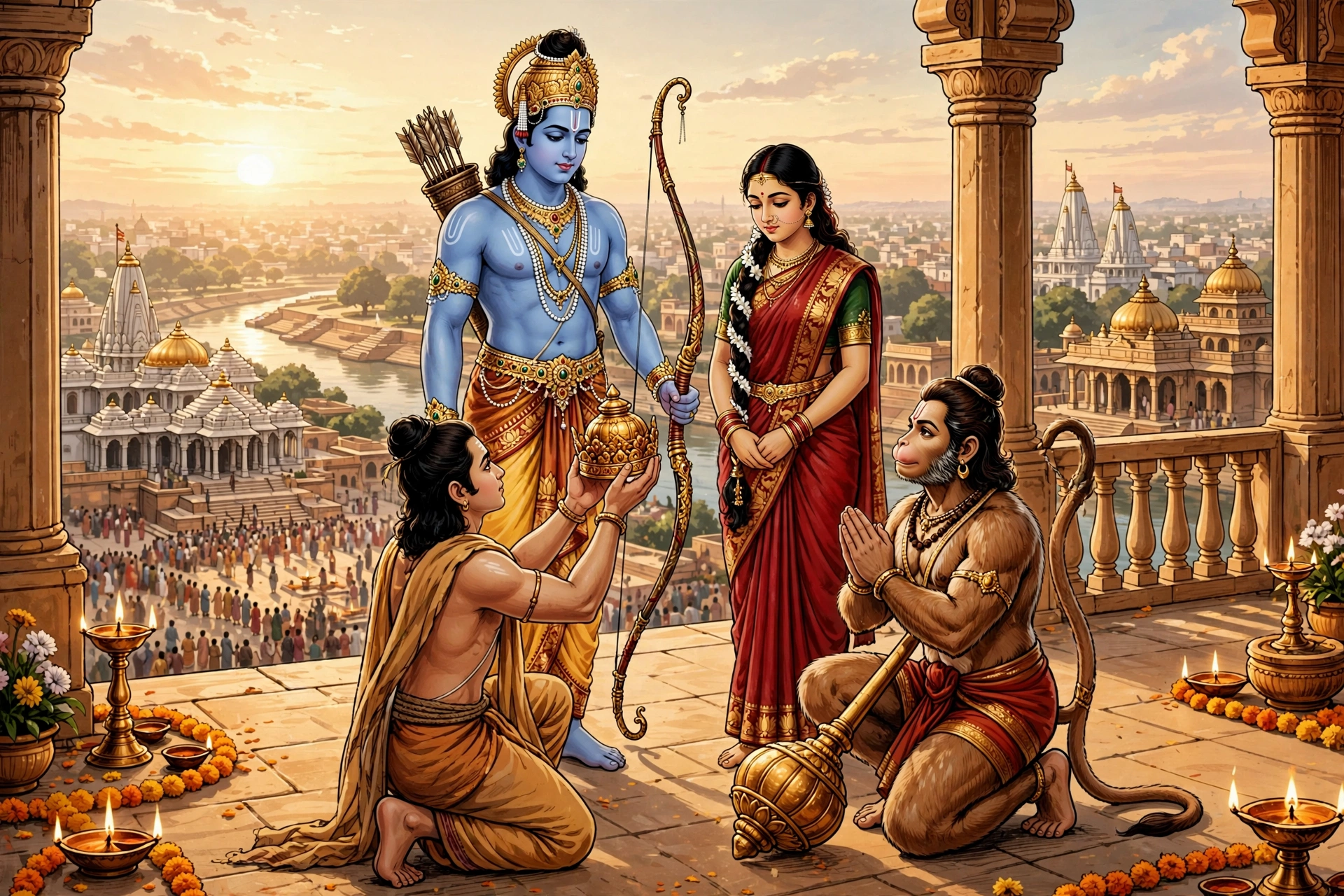
At Nandigrama, Bharata returns the sandals' trust and offers Rama the crown with both hands. Crowned king of Ayodhya with Sita smiling beside him, Rama watches all the people dance with joy.

नंदिग्राम में भरत खड़ाऊँ का भरोसा लौटाता है और दोनों हाथों से राम को ताज देता है। सीता पास मुस्कराती हैं, राम अयोध्या के राजा बनते हैं, और सारी प्रजा खुशी से नाचती है।

Slide 27 Insight

Love Tested Order Promised

Love Tested Order Promised

Slide 27 - Love Tested Order Promised

Why harsh words after victory? Because public doubt wounds even private love. Rama pays the price of limits; Sita, walking into fire, declares she is her own. So ask for proof before blame - and build one fearless rule at home.

जीत के बाद कठोर वचन क्यों? क्योंकि लोक की शंका निज प्रेम को भी दुख देती है। राम मर्यादा की कीमत चुकाते हैं; आग में चलती सीता कहती हैं कि वे अपनी मालिक खुद हैं। इसलिए दोष से पहले प्रमाण माँगो - और घर में निर्भयता का एक नियम बनाओ।

Chapter Saga

Full Narrative

संपूर्ण कथा वृत्तांत

Unabridged story based on Manmatha Nath Dutt's Valmiki Ramayana prose translation.

मन्मथ नाथ दत्त के वाल्मीकि रामायण गद्य अनुवाद पर आधारित संपूर्ण कथा।

The great sage Valmiki, devoted to austerity and Vedic study, asked Narada, the knower of words, who in this world at this time is filled with virtues and prowess. Who knows duty, is grateful, truthful, firm in vow, and seeks the welfare of all beings. Who is learned, knows how to keep subjects happy, is pleasing to behold, has his mind controlled, his anger restrained, is free from malice, and whom even the gods fear when enraged in battle.

Narada said with delight, listen, after due thought I shall tell you of such a person with the rare qualities you named. In the Ikshvaku line is born a prince named Rama. His soul is controlled, his prowess very great, his radiance shines, he has patience and his senses are restrained. He is wise, knows morality, speaks sweetly, is full of grace and destroys his foes. He stays engaged in the good of his subjects and increases the joy of Kausalya.

Rama has broad shoulders, long arms reaching to his knees, a conch - like neck, full jaws, a broad chest and plump shoulder - blades. His head is beautiful, his forehead graceful, his limbs symmetrical, his hue cool and his eyes large. He bears auspicious marks, firmness in promise, purity of body and mind, humility toward elders and self - knowledge. He is skilled in archery, his memory is sharp and he swiftly discerns the truth.

Like Prajapati he protects all, he knows the Vedas and Vedangas, is skilled in every learning, looks equally upon all, and good people come to him as rivers come to the ocean. In gravity he is like the sea, in patience like the Himalaya, in prowess like Vishnu and in beauty like the moon. In anger he is like the fire of dissolution, in forgiveness like the earth, in giving like Kubera and in truth like Dharma himself.

King Dasharatha, who desired the good of his subjects, lovingly prepared to make his virtuous eldest son Rama the heir. Rama's prowess was unfailing and he was devoted to the welfare of the people. Then Queen Kaikeyi asked for the two boons promised earlier. She asked forest exile for Rama and the coronation for Bharata. Bound by the duty of his promise, Dasharatha sent his dear son Rama to the forest, and by his father's order Rama set out to satisfy Kaikeyi.

On the eve of going to the forest, Sumitra's son Lakshmana joined Rama with humility and brotherly love. As Rohini follows the moon, so Sita of Janaka's line followed Rama. She was like divine power, dear to Rama as life, engaged in good deeds, filled with auspicious marks and foremost among wives. Father Dasharatha and the citizens followed far behind. Then at Sringaverapura on the Ganga's bank, Rama met the virtuous dear Nishada king Guha and sent the charioteer back.

Going from one forest to another, crossing many wide rivers, they reached Chitrakuta by Bharadwaja's guidance. There they built a lovely dwelling and lived as they wished, passing days in joy like gods and Gandharvas. Meanwhile, sunk in grief for his son, King Dasharatha wept and went to heaven. After him, though the Brahmanas led by Vashishtha pressed him, Bharata refused the kingdom and set out for the forest to propitiate revered Rama.

Bharata reached Rama and prayed with respect, but Rama said, you who know duty are also king. Because of his father's command Rama did not desire the kingdom and gave his sandals to Bharata and sent him back. Bharata touched Rama's feet and began to rule from Nandigrama hoping for his return. After he left, seeing the crowd of citizens, Rama entered the Dandaka forest. There lotus - eyed Rama killed Viradha and saw Sharabhanga, Sutikshna, Agastya and Agastya's brother.

At Agastya's word Rama gladly took Indra's bow, inexhaustible arrows, sword and quiver. While dwelling in Dandaka the sages came together seeking the destruction of the Rakshasas. Before those ascetics, glowing like fire, Rama vowed to kill the Rakshasas in battle. There Shurpanakha of Janasthana, who could change form at will, was disfigured. At her instigation came Khara, Trishira and Dushana, whom Rama killed with their followers, fourteen thousand Rakshasas were slain in that battle.

When his kinsmen were killed, Ravana, maddened by anger, went to seek Maricha's help. Maricha strongly dissuaded him, do not make enmity with that strong one, spare me, but driven by fate Ravana ignored his words and reached the hermitage with Maricha. Through illusion Maricha drew Rama and Lakshmana far away, then Ravana killed Jatayu and abducted Sita. Seeing the vulture dead and learning that Mithila's princess was taken, Rama wept in grief.

Filled with sorrow Rama cremated Jatayu and while searching for Sita met the dreadful and deformed Rakshasa Kabandha. The mighty - armed one killed him and burned his body, whereupon he went to heaven. That Rakshasa said to Rama, O prince of Raghu, go to the ascetic Shabari who knows morality. Rama the destroyer of foes went to Shabari, Shabari honored him greatly, then on the bank of the Pampa river Rama met Hanuman.

On Hanuman's advice Rama met Sugriva and told him all about Sita. Hearing it, Sugriva was pleased and made friendship with Rama before fire. Then the monkey king sadly told of his enmity with Vali and Rama vowed to kill Vali. Sugriva described Vali's strength and expressed fear, so to convince him he showed the huge corpse of Dundubhi like a hill. Smiling, mighty Rama flung it a full ninety miles away with his toe.

Then with a single strong arrow Rama pierced seven palm trees, a hill and down to the sixth nether world, which fully convinced Sugriva. Pleased, the mighty monkey went with Rama toward the Kishkindha cave. There golden - hued Sugriva roared loudly. At that roar Bali, lord of monkeys, with Tara's permission came forward for battle. Then Rama killed Bali on the spot with a single arrow and at Sugriva's request gave him the kingdom.

Having become king, Sugriva summoned all the monkeys and sent them in all directions to search for Janaki. On Sampati the vulture's advice mighty Hanuman leapt over the hundred - yojana salt sea. In Ravana's Lanka he found Sita sunk in worry in the Ashoka grove. Showing the token he told of Rama and Sugriva's friendship, comforted Videha's daughter and broke the palace gate. Then after killing five generals, seven ministers' sons and the hero Aksha, he was bound by Indrajit's weapon.

Since by the grandsire's boon he was free, Hanuman forgave the Rakshasas who were leading him away. Then sparing only Mithila's daughter's place, he burned all Lanka and returned to give the glad news. Hanuman of boundless spirit circled great - souled Rama and said, I have truly seen Sita. Then with Sugriva Rama went to the shore of the vast ocean and troubled the deep with sun - like arrows. Then the ocean, lord of rivers, appeared.

On the ocean's advice Nala built a bridge over the sea. By that bridge Rama went to Lanka and killed Ravana in battle. On regaining Sita, Rama felt shame and spoke harsh words to Sita before all. Unable to bear it, Sita entered the blazing fire. Then Agni assured Rama of Sita's sinlessness, which greatly pleased Rama and the gods honored him. The three worlds with the moving and unmoving, sages and gods rejoiced. Then Rama gave Lanka's throne to Vibhishana, foremost among Rakshasas.

Obtaining a boon from the gods Rama revived the monkeys fallen in battle and set out for Ayodhya with friends on the Pushpaka chariot. Reaching Bharadwaja's hermitage, Rama true in prowess sent Hanuman to Bharata. Recalling past events, Rama went with Sugriva on the Pushpaka to Nandigrama. There sinless Rama removed his matted locks with his brothers, regained Sita and took back the kingdom. Dasharatha's son Rama, lord of Ayodhya, began to guard his happy subjects like a father.

In his reign his subjects will find happiness and contentment, stay healthy, grow in righteousness and be free from mental unrest, disease and fear of famine. None will see his son die, women will remain ever chaste and never face widowhood. There will be no fear of fire, none will drown in water, no danger from wind, no fever will trouble, no fear of hunger or thieves. Towns and villages will be full of grain and wealth and all will live in joy as in the golden age.

Rama will perform a hundred horse sacrifices with countless gold, give ayutas and kotis of cows to learned men by rite and grant boundless wealth to famed Brahmanas. He will found a hundred royal lines and set the four castes to their own duties. After ruling for ten thousand and a hundred years Rama will go to Brahma's world. Whoever reads this holy, sin - destroying, merit - giving story of Rama as equal to the Veda is freed from all sin.

The man who reads this holy life - lengthening Ramayana is honored in heaven after death with his sons, grandsons and kinsmen. If a Brahmana reads it he attains excellence in speech, if a Kshatriya reads it he attains lordship over land, if a Vaishya reads it he attains abundant wealth in trade, and if a Shudra reads it he attains greatness.

तप और वेद - पाठ में लगे महर्षि वाल्मीकि ने शब्दों के ज्ञाता देवर्षि नारद से पूछा, इस दुनिया में इस समय ऐसा कौन है जो गुणों और पराक्रम से भरा हो। जो धर्म को जानता हो, कृतज्ञ हो, सत्यवादी हो, व्रत का पक्का हो और सब जीवों का भला चाहता हो। जो विद्वान हो, प्रजा को सुखी रखना जानता हो, देखने में प्रिय हो, जिसका मन वश में हो, क्रोध काबू में हो, जिसमें द्वेष न हो, और युद्ध में कुपित होने पर जिससे देवता भी डरें।

नारद ने प्रसन्न होकर कहा, सुनो, तुमने जिन दुर्लभ गुणों का नाम लिया है, सोच - विचार कर मैं तुम्हें ऐसा व्यक्ति बताता हूँ। इक्ष्वाकु वंश में जन्मा एक राजकुमार है, जिसका नाम राम है। उसका मन वश में है, पराक्रम बहुत बड़ा है, तेज चमकता है, उसमें धैर्य है और इंद्रियाँ काबू में हैं। वह बुद्धिमान है, नीति जानता है, मधुर बोलता है, कृपा से भरा है और शत्रुओं का नाश करता है। वह प्रजा के हित में लगा रहता है और कौसल्या का आनंद बढ़ाता है।

राम के कंधे चौड़े हैं, भुजाएँ लंबी और घुटनों तक पहुँचती हैं, गर्दन शंख जैसी है, जबड़े भरे हुए हैं, छाती चौड़ी और कंधों की हड्डियाँ भरी हुई हैं। सिर सुंदर है, माथा भव्य है, अंग सुडौल हैं, रंग शीतल है और आँखें बड़ी हैं। उसमें शुभ लक्षण हैं, वचन का पक्कापन है, शरीर और मन से पवित्रता है, बड़ों के प्रति विनम्रता है और आत्मज्ञान है। वह धनुष - विद्या में निपुण है, स्मरण - शक्ति तेज है और सत्य को जल्दी पहचान लेता है।

वह प्रजापति जैसे सबका पालन करता है, वेद और वेदांगों का ज्ञाता है, हर विद्या में कुशल है, सब पर समान दृष्टि रखता है और अच्छे लोग उसकी ओर ऐसे आते हैं जैसे नदियाँ समुद्र की ओर। गंभीरता में वह समुद्र जैसा है, धैर्य में हिमालय जैसा, पराक्रम में विष्णु जैसा और सुंदरता में चंद्रमा जैसा। क्रोध में वह प्रलय की आग जैसा है, क्षमा में पृथ्वी जैसा, दान में कुबेर जैसा और सत्य में साक्षात धर्म जैसा है।

प्रजा का हित चाहने वाले राजा दशरथ ने प्रेम से अपने बड़े और गुणवान बेटे राम को युवराज बनाने की तैयारी की। राम का पराक्रम अचूक था और वह हमेशा लोगों की भलाई में लगा रहता था। तभी रानी कैकेयी ने पहले दिए गए दो वरदान माँग लिए। उसने राम के लिए वनवास माँगा और भरत के लिए राजतिलक माँगा। वचन के धर्म में बँधे दशरथ ने अपने प्यारे बेटे राम को वन भेज दिया, और पिता की आज्ञा से राम कैकेयी को संतोष देने के लिए वन की ओर चल पड़े।

वन जाने की पूर्व संध्या पर सुमित्रा के पुत्र लक्ष्मण ने विनम्रता और भाई - प्रेम से राम का साथ पकड़ लिया। जैसे रोहिणी चंद्रमा के पीछे चलती है, वैसे ही जनक - वंश की सीता राम के पीछे चलीं। वह दिव्य शक्ति जैसी थीं, राम को प्राणों जैसी प्यारी थीं, शुभ कामों में लगी थीं, शुभ लक्षणों से भरी और पत्नियों में श्रेष्ठ थीं। पिता दशरथ और नगर के लोग दूर तक पीछे आए। फिर गंगा किनारे श्रृंगवेरपुर में राम ने धर्मात्मा प्रिय निषादराज गुहा से मिलकर सारथी को लौटा दिया।

वहाँ से एक वन से दूसरे वन जाते हुए, कई चौड़ी नदियाँ पार करके वे भरद्वाज के बताए मार्ग से चित्रकूट पहुँचे। वहाँ सुंदर कुटिया बनाकर तीनों अपनी इच्छा से रहने लगे और देवताओं और गंधर्वों जैसे आनंद से दिन बिताने लगे। उधर चित्रकूट पहुँचने पर पुत्र - शोक में डूबे राजा दशरथ रोते - रोते स्वर्ग चले गए। उनके बाद वशिष्ठ सहित ब्राह्मणों के बहुत कहने पर भी भरत ने राज्य लेना नहीं चाहा और पूज्य राम को मनाने के लिए वन की ओर चल पड़े।

भरत ने राम के पास पहुँचकर आदर से प्रार्थना की, पर राम ने कहा, धर्म को जानने वाले तुम भी राजा हो। पिता की आज्ञा के कारण राम ने राज्य नहीं चाहा और चरण - पादुकाएँ भरत को सौंपकर उसे लौटा दिया। भरत ने राम के चरण छुए और उनके लौटने की आशा में नंदिग्राम से शासन चलाने लगे। उनके जाने के बाद नागरिकों की भीड़ देखकर राम दंडक वन में चले गए। वहाँ कमल - नयन राम ने विराध का वध किया और शरभंग, सुतीक्ष्ण, अगस्त्य और अगस्त्य के भाई के दर्शन किए।

अगस्त्य के कहने से राम ने प्रसन्न होकर इंद्र का धनुष, कभी न खत्म होने वाले बाण, तलवार और तरकश ले लिए। दंडक में रहते हुए ऋषि राक्षसों के नाश के लिए एक साथ आए। जलती आग जैसे उन तपस्वियों के सामने राम ने युद्ध में राक्षसों को मारने का वचन दिया। वहीं जनस्थान की रहने वाली, इच्छा से रूप बदलने वाली शूर्पणखा विरूप की गई। उसी के उकसाने पर आए खर, त्रिशिरा और दूषण को राम ने साथियों सहित मार दिया, उस युद्ध में चौदह हजार राक्षस मारे गए।

अपने भाई - बंधुओं के मारे जाने पर रावण क्रोध से पागल होकर मारीच से मदद माँगने गया। मारीच ने बहुत रोका, उस बलवान से बैर मत करो, मुझे छोड़ दो, पर भाग्य से प्रेरित रावण ने उसकी बात नहीं मानी और मारीच के साथ आश्रम पहुँचा। माया से मारीच ने राम - लक्ष्मण को दूर खींचा, तब रावण ने जटायु को मारकर सीता का हरण कर लिया। गिद्ध को मरा देख और मिथिला - कुमारी के हरे जाने की बात जानकर राम शोक में रो पड़े।

दुख से भरे राम ने जटायु का दाह - संस्कार किया और सीता को खोजते हुए भयानक और विकृत शरीर वाले कबंध राक्षस से मिले। महाबाहु ने उसे मारकर उसका शरीर जला दिया, तब वह स्वर्ग गया। उस राक्षस ने राम से कहा, रघुवंशी, तुम नीति जानने वाली तपस्विनी शबरी के पास जाओ। शत्रुओं का नाश करने वाले राम शबरी के पास गए, शबरी ने उनका बहुत सम्मान किया, फिर पंपा नदी के किनारे राम की हनुमान से भेंट हुई।

हनुमान की सलाह से राम ने सुग्रीव से मिलकर सीता की सारी बात बताई। सुग्रीव ने सुनकर प्रसन्न होकर आग के सामने राम से मित्रता की। फिर वानरराज ने दुख से बालि से अपनी शत्रुता की कथा सुनाई और राम ने बालि को मारने का वचन दिया। सुग्रीव ने बालि का बल बताया और डर जताया, तो विश्वास दिलाने के लिए पहाड़ जैसा दुंदुभि का बड़ा शव दिखाया। हँसते हुए बलवान राम ने पैर के अँगूठे से उसे पूरे नब्बे मील दूर फेंक दिया।

फिर एक ही बलवान बाण से राम ने सात ताड़ के पेड़, पहाड़ और छठे पाताल तक छेद दिया, जिससे सुग्रीव को पूरा विश्वास हो गया। प्रसन्न होकर महाबली वानर राम के साथ किष्किंधा गुफा की ओर चले। वहाँ सुनहले रंग के सुग्रीव ने जोर से गर्जना की। उस गर्जना पर वानरों के स्वामी बालि तारा की अनुमति लेकर युद्ध के लिए सामने आए। तब राम ने एक ही बाण से बालि को वहीं मार दिया और सुग्रीव की प्रार्थना पर उसे राज्य सौंप दिया।

राजा बनकर सुग्रीव ने सब वानरों को बुलाया और जानकी की खोज में चारों दिशाओं में भेज दिया। संपाति गिद्ध की सलाह पर बलवान हनुमान सौ योजन लंबा खारा समुद्र लाँघ गए। रावण की लंका में अशोक वन में उन्होंने चिंता में डूबी सीता को पाया। निशानी दिखाकर राम - सुग्रीव की मित्रता सुनाई, विदेह - कुमारी को धीरज दिया और महल का द्वार तोड़ दिया। फिर पाँच सेनापति, सात मंत्रियों के बेटे और वीर अक्ष को मारने पर वे इंद्रजित के अस्त्र से बँध गए।

पितामह के वरदान से छूटे होने के कारण हनुमान ने उन्हें पकड़कर ले जाने वाले राक्षसों को क्षमा कर दिया। फिर मिथिला - कुमारी के स्थान को छोड़कर पूरी लंका जला दी और खुशखबरी देने के लिए लौट आए। असीम आत्मा वाले हनुमान ने महात्मा राम की परिक्रमा करके कहा, मैंने सच में सीता को देखा है। तब सुग्रीव के साथ राम विशाल समुद्र के किनारे गए और सूर्य जैसे बाणों से समुद्र को व्याकुल कर दिया। तब नदियों के स्वामी समुद्र प्रकट हुए।

समुद्र की सलाह से नल ने समुद्र पर सेतु बाँधा। उसी सेतु से राम लंका गए और युद्ध में रावण को मार दिया। सीता को पाकर राम को लज्जा हुई और सबके सामने उन्होंने सीता से कठोर वचन कहे। उसे सह न सकने पर सीता जलती आग में उतर गईं। तब अग्नि ने सीता के निष्पाप होने का आश्वासन दिया, जिससे राम बहुत प्रसन्न हुए और देवताओं ने उनका सम्मान किया। तीनों लोक, चर - अचर, ऋषि और देवता प्रसन्न हुए। फिर राम ने राक्षसों में श्रेष्ठ विभीषण को लंका का राज्य दिया।

देवताओं से वर पाकर राम ने युद्ध में गिरे वानरों को जीवित कर दिया और मित्रों के साथ पुष्पक विमान से अयोध्या के लिए चल पड़े। भरद्वाज के आश्रम पहुँचकर सत्य - पराक्रमी राम ने हनुमान को भरत के पास भेजा। पुरानी बातें याद करके सुग्रीव के साथ राम पुष्पक से नंदिग्राम गए। वहाँ पापरहित राम ने भाइयों सहित जटाएँ उतारीं, सीता को पाया और राज्य वापस लिया। अयोध्या के स्वामी दशरथ - पुत्र राम पिता जैसे अपनी सुखी प्रजा का पालन करने लगे।

उनके राज्य में प्रजा सुख और संतोष पाएगी, नीरोग रहेगी, धर्म में बढ़ेगी और मन की बेचैनी, रोग और अकाल के डर से मुक्त रहेगी। कोई अपने बेटे की मृत्यु नहीं देखेगा, स्त्रियाँ सदा पतिव्रता रहेंगी और कभी विधवा नहीं होंगी। आग का डर नहीं होगा, कोई पानी में नहीं डूबेगा, हवा से खतरा नहीं होगा, बुखार नहीं सताएगा, भूख और चोरों का भय नहीं होगा। नगर और गाँव अन्न और धन से भरे होंगे और सब सतयुग जैसे सुख से जिएँगे।

राम अनगिनत सोने से सौ अश्वमेघ यज्ञ करेंगे, विधि से अयुत और कोटि गायें विद्वानों को देंगे और प्रसिद्ध ब्राह्मणों को अपार धन देंगे। वे सौ राजवंश बसाएँगे और चारों वर्णों को अपने - अपने काम में लगाएँगे। दस हजार और सौ वर्षों तक राज्य करके राम ब्रह्मा के लोक जाएँगे। जो इस पवित्र, पाप नाश करने वाली, पुण्य देने वाली राम - कथा को वेद जैसी मानकर पढ़ता है, वह सब पाप से छूट जाता है।

आयु बढ़ाने वाली इस पवित्र रामायण को पढ़ने वाला मनुष्य मृत्यु के बाद अपने बेटों, पोतों और संबंधियों सहित स्वर्ग में सम्मान पाता है। यदि ब्राह्मण इसे पढ़े तो वाणी में श्रेष्ठता पाता है, यदि क्षत्रिय पढ़े तो भूमि पर स्वामित्व पाता है, यदि वैश्य पढ़े तो व्यापार में बहुत धन पाता है, और यदि शूद्र पढ़े तो बड़प्पन पाए।

Inquiry & Reflection

Discussion & Modern Takeaways

दार्शनिक विवेचना एवं जीवन-सूत्र

Ethical inquiry, character motives, and actionable modern wisdom.

चरित्र, नीति और जीवन मूल्यों की गहन पड़ताल तथा आधुनिक जीवन में व्यावहारिक सूत्र।

Inquiry 01

Why does Valmiki ask Narada who the complete man is at this time before beginning the tale, instead of simply starting Rama's story?

I see this not as curiosity but as method - first forge the criterion, then seek the person. Valmiki lists qualities - gratitude, truth, firmness in vow, care for the subjects' happiness - because without a standard a story remains mere entertainment. The modern mind makes the same mistake, we search for heroes in stories but never ask what kind of human we must become. Narada's answer that such a person exists gives hope that the ideal can be history, not only sky.

⚡ Actionable Takeaway

This week before watching any inspiring story, write on paper three qualities you want to make your life's measure, then test the story against that same measure.

वाल्मीकि कथा आरंभ करने से पहले नारद से यह क्यों पूछते हैं कि इस समय ऐसा पूर्ण मनुष्य कौन है, सीधे राम की कथा क्यों नहीं शुरू करते?

मेरे देखने में यह जिज्ञासा नहीं, विधि है - पहले कसौटी गढ़ो, फिर व्यक्ति खोजो। वाल्मीकि गुणों की सूची बनाते हैं - कृतज्ञता, सत्य, दृढ़ - व्रत, प्रजा - सुख की चिंता - क्योंकि बिना मानदंड के कथा केवल मनोरंजन रह जाती है। आधुनिक मन भी यही भूल करता है, हम कहानियों में नायक खोजते हैं पर पूछते नहीं कि हमें कैसा मनुष्य बनना है। नारद का उत्तर कि ऐसा व्यक्ति है, हमें आशा देता है कि आदर्श आकाश नहीं, इतिहास हो सकता है। जीवन - सूत्र: इस सप्ताह कोई भी प्रेरक कथा देखने से पहले कागज पर तीन गुण लिखें जिन्हें आप अपने जीवन में कसौटी बनाना चाहते हैं, फिर कथा को उसी कसौटी पर परखें।

⚡ जीवन-सूत्र (Takeaway)

Inquiry 02

Why does Narada string bodily marks like a conch - like neck and knee - long arms in the same garland as moral virtues like truth, forgiveness and compassion?

In my view this is not body - worship but philosophy - in India the body is character's certificate. A broad chest is not only strength but readiness to carry responsibility, large eyes are not only beauty but practice of equal vision, a cool hue signals victory over agitation. Modern psychology also says patience shows in shoulder tension and anger in the clenching of the jaw. Rama's portrait teaches that virtues are not abstract slogans, they descend into daily flesh.

⚡ Actionable Takeaway

This week once a day, not through mirror or camera, observe your shoulders, breath and movement of eyes and ask which quality your body is revealing today.

नारद राम के शंख जैसी गर्दन और घुटनों तक लंबी बाहों जैसे देह - लक्षणों को सत्य, क्षमा और करुणा जैसे नैतिक गुणों के साथ एक ही माला में क्यों पिरोते हैं?

मेरी दृष्टि में यह देह - पूजा नहीं, दर्शन है - भारत में शरीर चरित्र का प्रमाणपत्र है। चौड़ी छाती केवल बल नहीं, उत्तरदायित्व उठाने की तैयारी है, बड़ी आँखें केवल सौंदर्य नहीं, समदृष्टि का अभ्यास हैं, शीतल रंग उत्तेजना पर विजय का संकेत है। मनोविज्ञान भी आज कहता है कि धैर्य कंधों के तनाव में और क्रोध जबड़े की जकड़न में दिखता है। राम का वर्णन हमें सिखाता है कि सद्गुण अमूर्त नारे नहीं, रोज़ की काया में उतरते हैं। जीवन - सूत्र: इस सप्ताह दिन में एक बार शीशे या कैमरे से नहीं, अपने कंधों, साँस और आँखों की गति को जाँचें और पूछें कि मेरा शरीर आज कौन - सा गुण प्रकट कर रहा है।

⚡ जीवन-सूत्र (Takeaway)

Inquiry 03

Why does Rama accept an unjust exile to protect Dasharatha's word, and why does Bharata, offered an unsought kingdom, leave with the sandals for Nandigrama?

I feel the deeper issue here is trust, not obedience. If Dasharatha's boon broke, the institution of the king's word would break, so Rama sacrifices his right to save collective faith. Bharata reverses the same logic - to accept a throne gained by maneuver would break the order a second time. Both brothers treat power not as prasad but as trust, so one ripens in the forest and the other waits in a village. Against modern hunger for power, this is a revolutionary psychology.

⚡ Actionable Takeaway

This week where some gain, credit or post is coming to you without effort, pause for a day and ask whether accepting it will strengthen trust in the system.

दशरथ के वचन की रक्षा के लिए राम अन्यायपूर्ण वनवास क्यों स्वीकार करते हैं और भरत को अयाचित राज्य मिलते हुए भी वह पादुकाएँ लेकर नंदिग्राम क्यों चला जाता है?

मुझे लगता है यहाँ आज्ञाकारिता से बड़ा प्रश्न विश्वास का है। दशरथ का वरदान टूटता तो राजा के वचन की संस्था टूटती, इसलिए राम अपना हक़ छोड़कर व्यवस्था का भरोसा बचाते हैं। भरत उसी तर्क को उलट देता है - छल से पाया सिंहासन स्वीकार करना व्यवस्था को दूसरी बार तोड़ना होगा। दोनों भाई सत्ता को प्रसाद नहीं, धरोहर मानते हैं, इसीलिए एक वन में तपता है, दूसरा गाँव में प्रतीक्षा करता है। आधुनिक सत्ता - लोलुपता के विरुद्ध यह क्रांतिकारी मनोविज्ञान है। जीवन - सूत्र: इस सप्ताह जहाँ आपको बिना प्रयास कोई लाभ, श्रेय या पद मिल रहा हो, एक दिन ठहरकर पूछें कि क्या इसे स्वीकारना व्यवस्था के विश्वास को मज़बूत करेगा।

⚡ जीवन-सूत्र (Takeaway)

Inquiry 04

Why must Ayodhya's prince make a fire - witnessed friendship with forest - dwellers like Sugriva and Hanuman to win over Ravana?

In my reading this is the Ramayana's most modern signal - when the center breaks, the periphery saves. The palace's intrigue exiled Rama, but the forest gave him search, army and flight. Hanuman's leap over a hundred yojanas to see Sita in the Ashoka grove shows the epic wins not by valor alone but by relationships. The hero does not win alone, he wins by joining a different world. Greatness lies not in height but in connection.

⚡ Actionable Takeaway

This week for any stuck problem, seek advice or help from one person outside your rank and familiar circle.

अयोध्या के राजकुमार को रावण पर जीत के लिए सुग्रीव और हनुमान जैसे वनवासियों से अग्नि - साक्षी मैत्री क्यों करनी पड़ती है?

मेरे पढ़ने में यह रामायण का सबसे आधुनिक संकेत है - केंद्र जब टूटता है तो परिधि बचाती है। महल के षड्यंत्र ने राम को निर्वासित किया, पर वन ने उन्हें खोज, सेना और उड़ान दी। हनुमान का सौ योजन समुद्र लाँघकर अशोक - वन में सीता को देख आना दिखाता है कि महाकाव्य शौर्य से नहीं, संबंधों से जीतता है। नायक अकेला नहीं जीतता, भिन्न दुनिया को जोड़कर जीतता है। महानता ऊँचाई में नहीं, जुड़ाव में है। जीवन - सूत्र: इस सप्ताह अपनी किसी अटकी समस्या के लिए अपने पद और परिचित दायरे के बाहर के एक व्यक्ति से सलाह या सहायता माँगकर देखें।

⚡ जीवन-सूत्र (Takeaway)

Inquiry 05

Why does Rama speak harsh words before all after winning Sita back, and why does the tale then imagine a Ramarajya with no untimely death or fear?

I think here is the double trial of the ideal. The fire ordeal shows public suspicion wounds even private love - Rama pays the price of becoming the man of limits, and Sita by entering fire declares her autonomy. The Ramarajya described after is not a report but a vow - a map of a society free from fear, hunger and theft. It warns us that even an ideal person can err, so an ideal order is needed.

⚡ Actionable Takeaway

This week when you doubt a loved one, choose proof and dialogue before accusation, and make one concrete rule for fearlessness in your home or team.

सीता को जीतकर लाने के बाद राम सबके सामने कठोर वचन क्यों कहते हैं और कथा फिर ऐसे रामराज्य की कल्पना क्यों करती है जहाँ कोई अकाल मृत्यु और भय ही न हो?

मुझे लगता है यहाँ आदर्श की दोहरी परीक्षा है। अग्नि - परीक्षा दिखाती है कि सार्वजनिक शंका निजी प्रेम को भी घायल करती है - राम मर्यादा - पुरुष बनने की कीमत चुकाते हैं और सीता अग्नि में उतरकर अपनी स्वायत्तता घोषित करती हैं। इसके बाद वर्णित रामराज्य कोई रिपोर्ट नहीं, प्रतिज्ञा है - भय, भूख, चोरी से मुक्त समाज का मानचित्र। वह हमें चेताता है कि आदर्श व्यक्ति भी चूक सकता है, इसलिए आदर्श व्यवस्था चाहिए। जीवन - सूत्र: इस सप्ताह जब आप किसी प्रियजन पर संदेह करें तो आरोप से पहले प्रमाण और संवाद का मार्ग अपनाएँ, और अपने घर या टीम में भयमुक्ति का एक ठोस नियम बनाएँ।

⚡ जीवन-सूत्र (Takeaway)

Language: